Silence Unknown Callers: Pros, Cons, and What You Might Miss
Nine in ten people say they feel uncomfortable answering a call from a number they do not recognize, and that discomfort has a real cost. According to a consumer survey cited in FCC rulemaking, 78% of people missed an important call in the past month simply because they did not recognize who was calling.
Unknown calls have become genuinely difficult to sort through, since spam, robocalls, and scam attempts routinely use unfamiliar numbers right alongside legitimate ones. The Silence Unknown Callers feature is built to cut through that noise by automatically muting calls from numbers that are not saved in your contacts, reducing interruptions without requiring you to screen every single call yourself.
This guide walks through what the feature actually does, where it genuinely helps, and where it can quietly work against you.
What Does "Silence Unknown Callers" Actually Do?
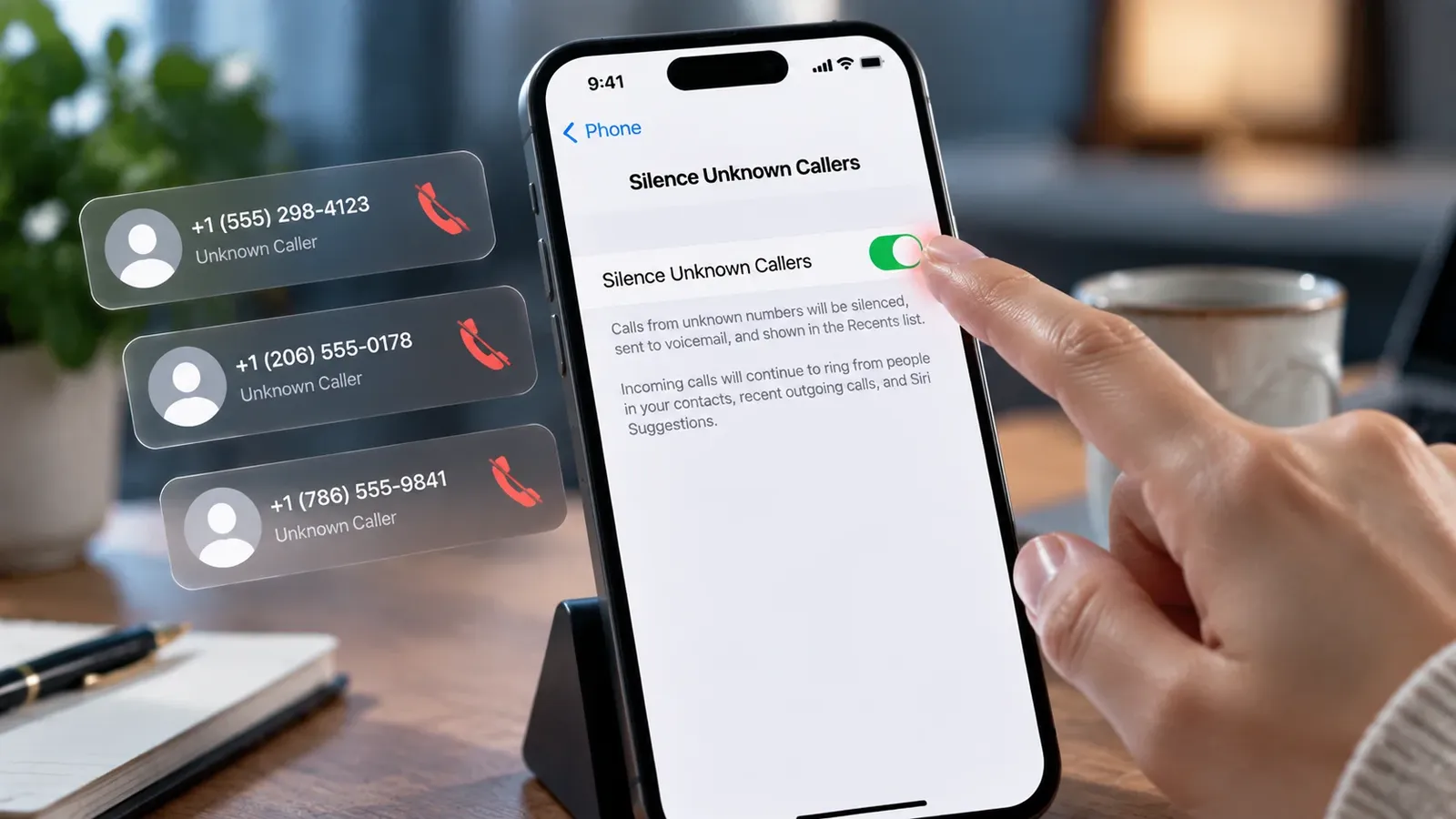
Silence Unknown Callers stops calls from unsaved numbers from ringing normally on your device. Instead of an audible ring, these calls are routed directly to voicemail and logged quietly in your recent calls list, while calls from saved contacts continue to ring through as usual. This is a built-in setting on iPhone, and Android devices offer similar call-screening options through their own settings or a dedicated app.
The feature does not block callers permanently. Silenced unknown callers can still leave a voicemail, and their call still shows up afterward, which is very different from an outright block. It also differs from a few related tools worth distinguishing clearly.

Why Do People Choose to Silence Unknown Callers?
Unwanted calls have grown into a genuine daily problem, driven by robocalls, scam attempts, telemarketing campaigns, and the same handful of unknown numbers calling back repeatedly throughout the week. For someone fielding five or six of these calls a day, the appeal of a single switch that makes most of them disappear is obvious.
Beyond the sheer volume, there is a psychological cost to constantly evaluating unfamiliar numbers. Every ring from an unrecognized number forces a small decision: answer, ignore, or wonder afterward whether it mattered.
Silencing unknown callers removes that repeated decision entirely, which is why people describe the appeal less in terms of blocking spam and more in terms of getting their attention back, reducing stress from constant interruptions, and having real control over what actually reaches them during the day.
The Pros of Silencing Unknown Callers
The silence unknown callers feature offers a handful of genuine, everyday benefits, and they go well beyond simply cutting down on annoying calls.
1. Fewer Spam and Robocall Interruptions
The feature meaningfully reduces disruptions from frequent spam calls, automated robocalls, and the same unknown numbers calling back again and again. For anyone receiving several unwanted calls a day, this alone can noticeably lower the number of interruptions, especially during the parts of the day when robocall volume tends to spike.
2. Less Exposure to Phone Scams
Reducing interaction with unknown callers lowers your exposure to vishing attempts, fake support calls, bank impersonation scams, and increasingly convincing AI voice scams that rely on you picking up and staying on the line long enough to be persuaded. Simply not answering removes the opportunity for a scammer to apply pressure in real time, which is very often safer than engaging directly, even for a few seconds.
- Quick Tip: If a genuinely important call does get silenced, checking the voicemail as soon as possible closes most of the gap, since most scam calls will not bother leaving one at all.
3. More Control Over When You Answer Calls
Silencing lets you review missed calls on your own schedule rather than having every call demand an immediate decision the moment it arrives. This is especially useful for people who receive many calls throughout the day but only want to actively engage with a small portion of them, since it shifts the review process to a moment you actually choose.
4. Better Focus and Fewer Distractions
Everyday benefits extend well beyond spam avoidance. Fewer unexpected rings mean better concentration during focused work, fewer interruptions to sleep from late-night robocalls, and more genuinely protected personal time when you are not on call for work or business. Reduced phone interruptions add up meaningfully across a full day, even if any single silenced call felt minor on its own.

The Cons of Silencing Unknown Callers
The same feature that filters out unwanted noise inevitably filters out some legitimate calls too, and these trade-offs deserve just as much attention as the benefits.
1. You May Miss Important Calls From New Numbers
Legitimate callers frequently use numbers that are not saved in your contacts, simply because you have never had a reason to save them before. A few situations come up constantly:
- A doctor's office calling about test results or an appointment change.
- A delivery driver trying to confirm a drop-off location before arriving.
- An employer or recruiter calling from an office line you have never seen.
- A school reaching out about a student during the school day.
- A service provider confirming a scheduled visit or repair window.
None of these callers did anything wrong. They simply had no way of knowing their number was not already saved on your phone.
2. It Can Be Risky During Important Life Events
Certain periods make silencing unknown callers considerably riskier than usual, since they are exactly the times when an unfamiliar number is most likely to be exactly the call you are waiting for. Job searches, moving to a new home, healthcare appointments, emergency situations, and waiting on a callback from a specific business all fall into this category.
- Note: If you know you are waiting on a specific call during one of these periods, temporarily disabling the feature is often safer than relying on catching the voicemail in time.
3. It Does Not Identify Whether a Caller Is Safe
Silencing treats every unknown caller identically, whether the call is a legitimate first-time contact or an active scam attempt in progress. A brand-new client and a scammer running through a script both get muted in exactly the same way, which means the feature gives you no actual information about who was calling or why, only the fact that someone tried.
Caller identification solves a different problem entirely. Instead of hiding the call, it tells you something meaningful about the number itself before you have to decide anything. Learning to recognize common smishing and vishing tactics adds a further layer of judgment on top of caller ID, since knowing the pattern behind a scam helps even when the number itself looks unfamiliar.
4. It May Create Missed Communication Loops
A few recurring problems tend to show up once silencing becomes a daily habit: missing a call and never getting around to checking the voicemail, delayed responses to genuinely time-sensitive messages, and a general sense of confusion about who actually tried to reach you and why.
None of these problems are dramatic on their own, but over weeks and months, these small gaps can quietly add up to real missed opportunities.
What Calls You Might Miss When Unknown Callers Are Silenced
A few specific categories of calls are especially likely to come from numbers you have not saved yet, simply because the relationship is new:
- A new healthcare provider you have not visited before.
- Delivery notifications from a courier using a local dispatch number.
- A repair or service technician confirming an appointment window.
- Recruiters reaching out about a new job opportunity.
- New business contacts making initial contact for the first time.
- Government offices following up on an application or request.
- School or childcare providers calling about a schedule change.
Saving important numbers the moment you learn them, and getting into the habit of checking voicemail regularly, closes most of this gap without requiring you to turn the feature off entirely.
Understanding what actually happens once you engage with a scam caller also helps put the trade-off in perspective: the calls silencing filters out are rarely worth the risk of answering blind, even accounting for the occasional legitimate call you might miss.

Silence Unknown Callers vs Caller ID: Which Approach Is Better?
These two approaches solve genuinely different problems, and understanding that distinction is what actually helps you choose the right one for your situation. The silence unknown callers feature and caller identification are not competing solutions so much as two different tools built for two different moments in the same decision.
Silencing Focuses on Reducing Interruptions
The goal of silencing is limiting disruption, full stop, without trying to explain anything about the calls it filters out. It works best for people who feel genuinely overwhelmed by spam call volume, and for users who rarely receive legitimate first-time calls from unknown numbers in the first place, since they have the least to lose from the trade-off.
Caller ID Focuses on Making Better Decisions
Caller identification helps you understand who may actually be calling, whether a number looks suspicious based on reported activity, and whether the call is worth your attention before you decide anything at all.
Sync.me's caller ID and spam protection identifies unknown callers, detects spam and scam patterns, and helps you decide whether to answer or ignore with real context, rather than simply removing the decision through silence.
Combining Both Approaches
Many people get better results by combining both tools rather than choosing one exclusively. You can silence obvious spam while still identifying unknown but potentially important callers, maintaining access to legitimate communication without reopening the door to every unwanted call that silencing was meant to stop.
Reviewing how to answer spam calls without giving anything away rounds out this approach for the calls you do end up deciding to pick up.
- Note: A practical starting point is enabling silencing for everyday spam while keeping caller ID active in the background, so you still get useful context on anything that slips through unrecognized.
Silence Buys You Quiet, Not Certainty
Silencing unknown callers is genuinely useful, but it is not a complete spam solution, and it was never designed to be one. What it actually gives you is quiet: fewer interruptions, fewer rings from numbers you do not recognize, and less daily friction from unwanted calls. What it does not give you is certainty about who any of those silenced callers actually were.
That is the real trade-off underneath the feature. You gain a calmer phone, but you lose the information that would tell you whether a silenced call deserved a callback. Combining smart filtering, real caller identification, and an updated contact list closes that gap, giving you the quiet without sacrificing the context you would otherwise be giving up.
Want more context before deciding whether to answer an unknown number?
Try Sync.me's caller ID and spam protection to identify unknown callers and flag known scam numbers automatically.
Frequently Asked Questions
Will silencing unknown callers stop spam calls completely?
No, silencing only prevents unsaved numbers from ringing normally; it does not stop the calls from being placed in the first place. Spam callers can still leave voicemails and will keep attempting to reach you, just without an audible ring.
Can emergency services still reach me if unknown callers are silenced?
Yes, most implementations of this feature automatically allow emergency services through or temporarily disable silencing after you call emergency services yourself. It is still worth confirming how your specific device handles this, since behavior can vary slightly by platform.
What is the difference between silencing and blocking a phone number?
Silencing mutes the ring for unsaved numbers but still logs the call and allows a voicemail, while blocking prevents a specific number from reaching you at all. Blocking is permanent and targeted, while silencing is broad and reversible.
Can caller ID apps identify calls that are silenced by phone settings?
Yes, caller ID tools generally still process and identify silenced unknown callers even though your phone does not ring, since the identification happens independently of the silencing setting. This means you can often see who called even if the call itself never rang audibly, similar to how caller screens can highlight important calls at a glance.
How can businesses make sure their calls are not mistaken for spam?
Businesses can encourage customers to save their number in advance, use consistent caller ID branding where available, and avoid patterns that resemble known robocall behavior, such as extremely short or repetitive call attempts. Providing an alternate way to confirm identity, like a text follow-up, also helps legitimate calls get answered.
Publicaciones relacionadas
How to Identify an Unknown Caller? Simple Methods That Work
Discover simple ways to identify unknown callers using phone tools, apps, reverse lookup services, and online searches. Avoid scams and missed calls.
How to Get Rid of Potential Spam Calls and Stop Unknown Call Alerts
Discover how to get rid of potential spam calls, understand spam alerts, and use tools to reduce unwanted phone calls effectively.
How to Get Caller ID: Identify Unknown Numbers on Your Phone
Learn how to get caller ID, identify unknown callers, and improve caller identification using phone settings, apps, and lookup tools.