Real-Time Caller ID vs. Phone Number Reverse Lookup: What's the Difference?
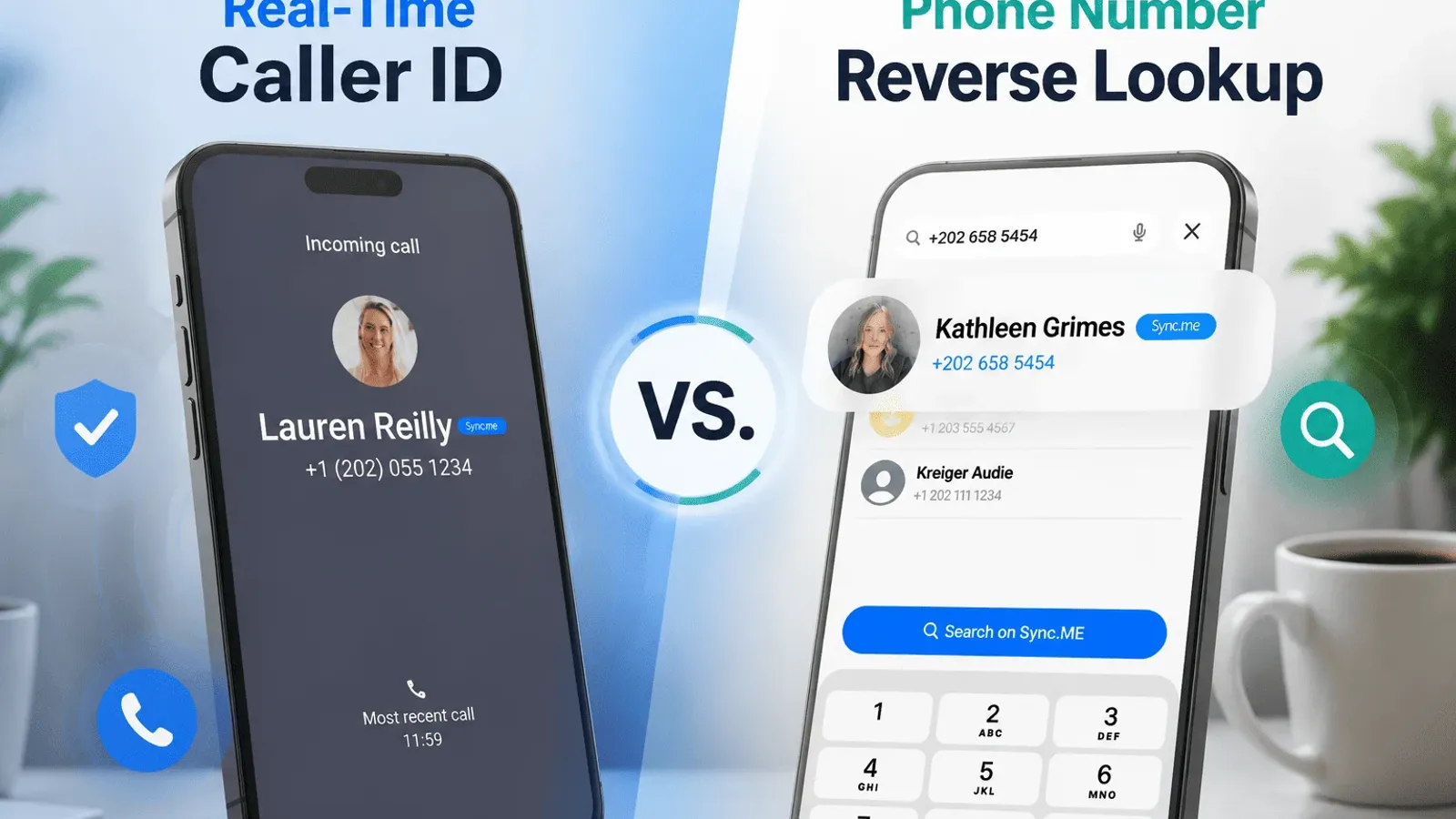
The core difference comes down to timing. Real-time caller ID identifies who is calling while your phone is still ringing, while a phone number reverse lookup lets you search for details about a number after a call has already happened. Both solve related problems, but they answer different questions at different moments.
According to the YouMail Robocall Index, 2025 Annual Report, U.S. consumers received 52.5 billion robocalls over the year, with unwanted telemarketing and scam calls making up 57% of that volume. With that many unknown numbers reaching phones every day, the question is not whether you will see one, but how you decide what to do with it.
When an unknown number appears on your screen, do you need to identify it before answering, or is it something to investigate afterward? That question comes up constantly now that spam and scam calls make up more than half of all unwanted traffic. This guide breaks down what real-time caller ID and phone number reverse lookup actually do, how they differ, and why most people end up needing both.

What Is Real-Time Caller ID?
Real-time caller ID is a feature that identifies incoming callers while your phone is actively ringing. It works before you pick up, giving you a chance to make an informed decision in the moment. Features like customizable caller screens that highlight important calls build directly on this identification, turning a simple name match into a faster visual decision.
The information it may show includes:
- The caller's name or business name.
- Spam or scam warnings based on reported activity.
- Community-sourced user reports about the number.
- Possible scam indicators, such as a known robocall pattern.
Its main purpose is simple: help you decide whether to answer, ignore, block, or verify a call before it connects.
How Real-Time Caller ID Works
Caller ID services compare an incoming number against several databases the moment your phone starts ringing. These typically include:
- Saved contact information.
- Public records and business listings.
- Crowdsourced user reports.
- Spam and scam number databases.
Good to Know: Results appear almost instantly because the comparison happens in the background while the call is still coming through, not after you already answered. This is especially useful for calls from unfamiliar or international numbers, which are harder to judge from the number alone.

What Is Phone Number Reverse Lookup?
Phone number reverse lookup means searching for information connected to a number after you have already found or received it. It is a research tool rather than an in-the-moment decision tool. A reverse lookup of a phone number is typically something people do at their own pace, often with a cup of coffee in hand rather than a ringing phone.
People commonly turn to a number reverse lookup for a few specific reasons:
- Checking a missed call you did not recognize.
- Identifying an unknown number that keeps appearing.
- Confirming whether a number belongs to a legitimate business.
- Investigating a pattern of repeated calls from the same source.
Reverse lookup is more about researching a number thoroughly than deciding in real time whether to pick up.
How Phone Number Reverse Lookup Works
A reverse lookup of a phone number starts with the user entering the number into a lookup service. The service then searches available databases to compile whatever information exists, and the result usually takes only a few seconds to generate even though the process is manual.
Possible results can include:
- A name or business association tied to the number.
- General location details, such as the area the number is registered to.
- Spam or scam reports filed by other users.
- User comments describing past experiences with the number.
- The number type, such as mobile, landline, or VoIP.
Real-Time Caller ID vs. Reverse Lookup: Key Differences
The two tools solve related problems, but the differences become clear once you compare them side by side.

When You Use Them
Real-time caller ID is used before answering an incoming call, especially during unexpected or unfamiliar calls. A phone number reverse lookup is used after receiving a missed call or whenever you want to investigate an unknown number more closely.
Speed and Convenience
Caller ID provides information instantly, since the identification happens automatically while the phone is ringing. Reverse lookup requires you to manually search for a number, which takes more time but allows for a deeper result.
Real-time identification matters most when someone has only a few seconds to decide whether a call is worth answering. That speed is the entire value of the feature.
Type of Information Provided
Caller ID focuses on immediate recognition: who may be calling, and whether the call looks suspicious enough to avoid. A phone number reverse lookup focuses on investigation, surfacing more detail, prior reports, and past associations tied to the number.
Best Use Cases
Real-time caller ID works best for avoiding spam calls, recognizing important calls at a glance, and screening unknown callers before they ever ring through. Reverse lookup works best for checking missed calls, investigating repeated unknown numbers, and confirming suspicious contacts you want more context on.
Quick Tip: If you only have seconds to decide whether to answer, caller ID is the right tool. If you already missed the call and want the full picture, reach for a phone number reverse lookup instead.
Why You May Need Both Caller ID and Reverse Lookup
These two tools complement each other rather than compete. Relying on only one of them leaves a gap, since caller ID cannot investigate a number after the fact, and reverse lookup cannot warn you before you answer. A typical workflow often looks like this:
- Real-time caller ID flags a suspicious incoming call, giving you a warning before you decide to answer.
- You choose to ignore or block the call based on that warning.
- A phone number reverse lookup helps you investigate afterward, especially if the same number keeps calling back.
- Combining both results helps you spot patterns, such as a number tied to a known scam campaign.
Using both tools together helps you avoid unnecessary callbacks and recognize patterns that a single lookup or a single incoming alert might miss on its own.
How Sync.me Combines Caller Identification and Safer Call Decisions
Sync.me supports both sides of this process instead of forcing a choice between them. Real-time caller ID identifies unknown callers as they come in and flags spam or scam activity before you ever answer, using the same combination of contact data, public listings, and user reports described earlier.
For calls you want to investigate further, Sync.me's phone number reverse lookup helps you research a number after the fact, whether it is a missed call, a repeated unknown number, or a contact you want to verify. Together, these features support more informed decisions about answering or blocking calls, and they contribute to better contact accuracy over time.
Caller identification works best as the first step, with reverse lookup available whenever a number needs a closer look.
Reviewing how to answer spam calls without giving anything away rounds out the picture for calls that do get answered.
What Neither Tool Can Fully Guarantee
Both real-time caller ID and phone number reverse lookup rely on data that is reported, collected, and updated over time. Neither one offers a perfect, instant answer in every situation, and knowing their limits helps you use each one appropriately.
- Caller ID can be fooled by spoofing. Scammers can fake the number and name shown on your screen, and increasingly sophisticated tricks like voice cloning scams mean a familiar-looking caller ID is not absolute proof of identity.
- Reverse lookup results depend on available data. A newly issued number or a rarely reported one may return limited or no useful information.
- Databases update on different schedules. Spam reports and public records are not always instantly current, so very recent scam numbers may take time to appear.
- A clean result today does not guarantee a clean result tomorrow. Numbers get reassigned and resold, so a number that was safe last year could be tied to a scam campaign now.
- Neither tool replaces basic verification habits. Recognizing common vishing tactics still matters even when a number looks clean on both fronts.
Two Tools, One Goal: Knowing Who Is Really Calling
Real-time caller ID and phone number reverse lookup are not competing tools. They solve different problems at different moments, one before you answer, and one after you already have a number to investigate.
Real-time caller ID gives you a quick read the instant a call comes in. A reverse lookup of a phone number gives you the deeper background once you decide a number is worth investigating further. Safer calling starts with knowing who is contacting you before you take action, whether that action happens in the first few seconds or after a closer look.
Ready to screen calls in real time and investigate unknown numbers afterward?
Try Sync.me for free and identify unknown callers and research suspicious numbers in one place.
Frequently Asked Questions
Can a reverse phone lookup identify every unknown caller?
No, results depend on how much information is available in public records, user reports, and spam databases for that specific number. Newer numbers or ones with little reported activity may return limited results.
Why might caller ID show a different name than a reverse lookup result?
Caller ID often pulls from a faster, real-time database, while a phone number reverse lookup can draw on a broader range of sources collected over time. Business names, personal names, and reported aliases can all differ slightly between the two.
Can scammers fake the information shown in caller ID?
Yes, spoofing technology lets scammers display a fake name or number on caller ID, making a call look local or familiar when it is not. This is why a clean-looking caller ID should never be treated as complete proof of identity.
Is a missed call from an unknown number worth looking up?
It depends on the situation, but a number reverse lookup is worth doing if the call was repeated, left a voicemail, or came from an area code you do not recognize. It costs little time and can confirm whether the number is legitimate or reported as spam.
How often are phone number databases updated?
Update frequency varies by provider, but most spam and scam databases refresh regularly as new reports come in from users. Public records and business listings tend to update less frequently, which is why very recent numbers may not show complete information right away.
Post correlati
How to Get Caller ID: Identify Unknown Numbers on Your Phone
Learn how to get caller ID, identify unknown callers, and improve caller identification using phone settings, apps, and lookup tools.
How to Find the Owner of a Phone Number: 7 Proven Methods
Learn how to find the owner of a phone number using 7 proven, legal methods. Compare free and paid lookup tools to identify unknown callers safely.