Spam Calls From Different Countries: Are They Random or Part of a Bigger Scam?
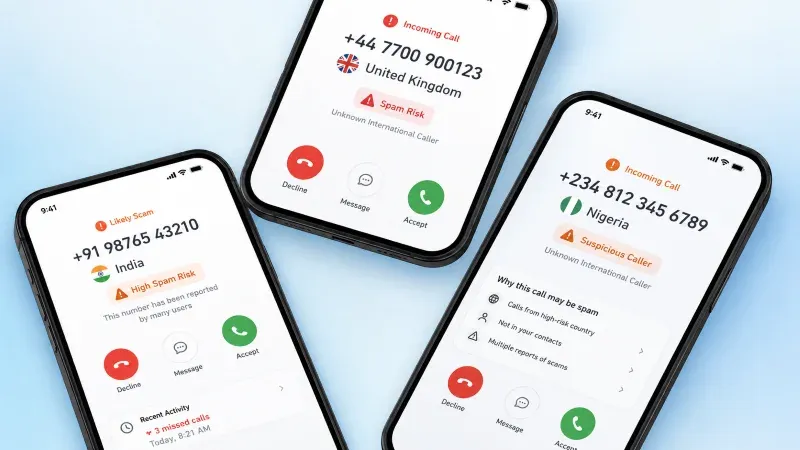
Spam calls from different countries are usually both at once: some are random robocalls testing whether a number is active, and others belong to coordinated scam operations that spoof foreign caller IDs to look convincing. According to the Federal Trade Commission, Americans reported losing $3.5 billion to imposter scams in 2025 alone, many of them starting with an unsolicited phone call.
The confusion is understandable. One day it's a number from Nigeria, the next it's Colombia, then a UK code shows up. It can feel like a global operation is targeting one phone, or it can feel like pure coincidence. This guide breaks down why spam calls from different countries happen, how to tell a random robocall from a coordinated scam, and which warning signs deserve immediate attention.
Why Are You Getting Spam Calls From Different Countries?
International spam calls usually trace back to one of five sources: leaked data, active number testing, mass robocall systems, spoofed caller ID, or callback traps. None of these require a scammer to know anything personal. Your number simply needs to exist in a list that got sold, scraped, or dialed automatically.
- Your number appeared in a data leak or marketing list, exposed through a breach at a retailer, app, or service provider.
- Scammers are testing which numbers are active, often through a short, silent, or one-ring call.
- Robocall systems are dialing large batches of numbers, working through millions of digits a day at almost no cost.
- The caller ID may be spoofed to look like another country, when the real origin could be anywhere, including a domestic call center.
- A scammer wants a callback to trigger charges or confirm the number, sometimes through a premium-rate line.
A single odd call from abroad is usually meaningless. Repeated spam calls from other countries, clustered close together, are a stronger signal that a number has landed on an actively worked list.

Are International Spam Calls Always From the Country Shown?
No, the country code displayed on screen does not always reveal where a caller actually is. Caller ID spoofing lets scammers dial from anywhere while making the number appear local, foreign, or identical to a real business line. This is precisely why judging a call by its country code alone is unreliable.
Spoofing technology has become cheap and widely available, so a number showing a Mexican or German prefix could just as easily originate from a call center a few states away. What matters more than the displayed origin is behavior: how urgent the caller sounds, what they're asking for, and whether they can be verified independently. A number repeating across multiple unrelated countries in a short window is a stronger red flag than the country itself.
Caller ID and reverse phone lookup tools add useful context before answering. Checking a number first reveals whether other users have already flagged it as spam, turning a guessing game into an informed decision.
Common Types of Spam Calls From Foreign Countries
Not every international call follows the same script. Recognizing the pattern early is usually enough to avoid falling for it. The five categories below account for most spam calls from foreign countries reported by users.
1. One-Ring Callback Scams
The phone rings once, sometimes not even a full ring, then stops. The goal is curiosity: the caller wants the missed call to look important enough to trigger a callback.
Calling back an unknown international number can connect to a premium-rate line, generating charges on the next phone bill. Even without a direct fee, the callback confirms the number is active and invites more spam calls from different countries in the weeks that follow.
2. Fake Bank or Account Security Calls
A caller claims there's a problem with an account, often citing suspicious activity or a blocked card. The pressure is designed to short-circuit careful thinking, and it may ask for a password, card number, or a one-time verification code sent by text.
No legitimate bank will ever ask for a full password or a one-time code over the phone. The safest response is to hang up and call the number printed on the back of the card or listed on the bank's official website.
3. Delivery, Customs, or Package Scams
The caller claims a parcel is delayed, held at customs, or requires an extra payment to release, and these scams often pair the call with a follow-up smishing text containing a fake tracking link.
The goal is collecting a card number, a small "clearance fee," or enough data for identity theft. Genuine courier issues get resolved through official tracking portals, not unsolicited calls demanding payment.
4. Tech Support or Device Warning Calls
A caller insists a phone, computer, or account has been compromised, pushing toward installing software or granting remote access.
This is risky because remote-access tools hand a stranger control over files, banking apps, and saved passwords. Real security warnings come from the device itself, never from an unsolicited call.
5. Prize, Investment, or Job Offer Scams
The caller offers a prize, a crypto investment with guaranteed returns, or a remote job paying unusually well, and the conversation often starts casually before requesting a fee or banking details to "release" the funds. Any offer built on urgency and guaranteed profit deserves independent verification first.
Are These Calls Random or Part of a Bigger Scam?
Both explanations can be true at once, and telling them apart depends on the pattern rather than any single call. A lone robocall from an unfamiliar country is often just a test, while repeated spam calls from different countries in rotation usually point to something more organized. The pattern matters more than any individual call.
- Random robocalls often test whether a number is active before it's added to a resale list.
- Repeated calls from changing countries can mean automated systems are rotating spoofed numbers to dodge spam filters.
- Calls followed by suspicious texts, WhatsApp messages, or emails suggest a coordinated, multi-channel scam.
- A caller who already knows a name, employer, or partial account details likely got it from leaked or scraped data.
The table below summarizes how to tell the two apart at a glance.

Warning Signs an International Call May Be a Scam
Certain behaviors show up consistently across scam campaigns, regardless of which country the number displays. Watching for these patterns is faster and more reliable than trying to trace the call's true origin.
- The number is unknown, from a country with no personal or business connection.
- The caller creates urgency, fear, or pressure before there's time to think.
- The caller asks for money, codes, passwords, or personal details over the phone.
- The caller insists on an immediate callback rather than allowing independent verification.
- The call disconnects after a single ring, a classic callback-bait sign.
- The caller refuses to let the recipient verify separately through an official channel.
- Similar calls arrive from multiple countries in a short period.
- The number is already flagged as spam on a caller ID platform.
Anyone who spots two or more of these signs in the same call should treat it as a scam attempt rather than a coincidence, and end the call without engaging further.
Financial and Data Risks Behind Spam Calls From Different Countries
The financial risk from spam calls from other countries isn't limited to people who fall for the full script. A callback to a spoofed number can trigger unexpected charges, and sharing one verification code can undo two-factor authentication in seconds. A verification code read aloud over the phone is functionally the same as handing over a password.
There's also a data risk worth noting. Engaging with a spam call, even to argue with the caller, confirms the number is active and monitored, which tends to increase future spam calls from foreign countries rather than reduce them. Older adults and first-time recipients face a higher practical risk, since fake bank and tech support scripts are built around unfamiliarity with how real institutions communicate.

How to Reduce Spam Calls From Different Countries
- Avoid calling back unknown international numbers. A missed one-ring call is never worth the risk of a premium-rate charge.
- Look up unfamiliar numbers before answering. This step-by-step guide to identifying unknown callers walks through what to check first.
- Enable call blocking for flagged spam numbers, following this guide to blocking spam calls on Android and iPhone, to remove the temptation to answer out of curiosity.
- Never share verification codes, passwords, or card numbers over the phone.
- Verify through official channels, using the number on a bank card, never one given by the caller.
- Report confirmed scam numbers. Here's how to report a spam number so other users can spot it faster.
The Bottom Line on Spam Calls From Different Countries
Spam calls from different countries can look random on the surface, but the pattern behind them - spoofed IDs, number rotation, and coordinated follow-up messages - usually points to something more deliberate.
The safest approach stays the same regardless of which country flashes on the screen: pause, check the number, avoid calling back, and verify anything urgent through an official channel. Knowing who is actually calling remains one of the simplest ways to protect personal time, privacy, and money.
Screen Unknown International Numbers Before You Answer
Try Sync.me's caller ID and spam protection app to see who's really behind an unknown international number before you ever answer.
Frequently Asked Questions
What country do most spam calls come from?
Recent industry data points to India and Nigeria as leading sources of spam calls outside the United States, though displayed country codes can be spoofed and don't always reflect the caller's real location.
Why am I getting spam calls from other countries?
It usually comes down to a leaked number, an active robocall campaign, or a spoofed caller ID. Repeated calls from rotating countries often mean the number is on an active dialing list.
Does an international caller ID always show the caller's real location?
No, spoofing lets scammers display almost any country code regardless of where the call actually originates. Behavior and verification signals matter more than the country shown on screen.
Is it dangerous to call back an unknown foreign number?
Calling back can connect to a premium-rate line and result in unexpected charges. It also confirms to scammers the number is active, which tends to increase future spam calls from foreign countries.
Why do some international spam calls hang up after one ring?
One-ring calls are designed to bait a callback out of curiosity rather than reach a live conversation. Returning the call is exactly what the scammer is hoping for.
Related posts
7 Signs of Potential Spam Calls You Should Never Ignore
Learn to recognize potential spam calls before you answer. These 7 warning signs help you identify suspicious calls and protect your personal information.
Why Are You Getting So Many Spam Calls? 7 Common Reasons
Getting so many spam calls lately? Discover the 7 real reasons your number keeps ringing and what you can do to stop them with Sync.me.