What Is Neighbor Spoofing? Why Spam Calls Look Like Local Numbers
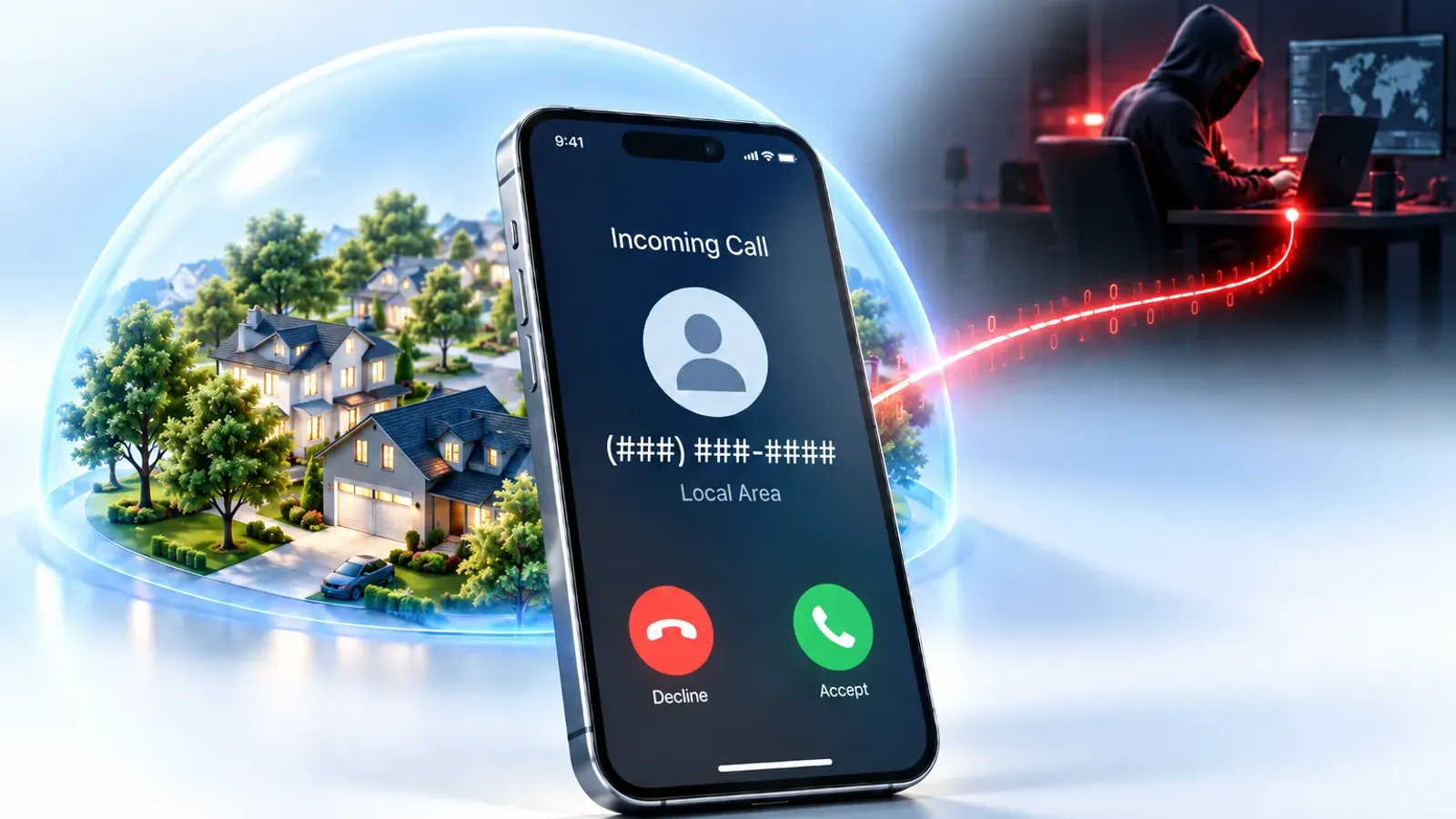
Neighbor spoofing is a caller ID trick in which scammers display a number with your own area code and often the same first digits as your number, so a scam call looks like it comes from someone nearby. The FCC says robocallers use it to increase the likelihood that you will answer, according to its consumer guide on caller ID spoofing.
A call from your own area code feels more trustworthy than one from a region you do not know. It could be a neighbor, a school, a clinic, or a delivery driver, so many people pick up. Phone calls accounted for 11% of fraud reports that indicated a loss in 2025, according to FTC data. Neighbor spoofing calls are built to win that first moment of trust.
This guide explains how the tactic works, how to spot it, and how to handle neighbor spoofing spam calls without missing the calls that matter.
What Is Neighbor Spoofing?
Neighbor spoofing is a form of caller ID spoofing in which scammers display a number with an area code and prefix similar to the recipient's own number. If your number starts with (555) 123, the call may show a number that begins the same way. So, what is neighbor spoofing in practice? It is a disguise for the number on your screen.
The number shown on your screen is not always the number used to place the call. The displayed number is a label that scammers can set with calling software. The real call may come from another city or another country, and the person who owns the displayed number often knows nothing about it. A local-looking number does not prove the caller is nearby or legitimate.
Calling software and some phone services let a caller choose which number appears. The FCC notes that spoofing can have legitimate uses, such as displaying a business's main toll-free number, and scams are the harmful use of the same ability.

- Good to Know: Some spoofed calls display your own number as the caller. This variation is sometimes called reflection spoofing, and it works for the same reason: familiar digits lower your guard.

How Does Neighbor Spoofing Work?
Neighbor spoofing follows three simple steps, from choosing a number to winning an answer.
Matching Your Area Code and Phone Number Prefix
Area codes and prefixes are public numbering information, so scammers can build a call list and choose displayed numbers that match each target. Many calls match your area code and the three-digit prefix, which together are the first six digits of your number. Software then sets the displayed number for every outgoing call, and matching those first digits makes the call feel familiar.
The result is a call that looks like it belongs to your neighborhood even though no neighbor is involved.
Making the Call Look Like It Comes From a Local Person or Business
Spoofed numbers may resemble those of neighbors, local businesses, service providers, or other nearby contacts. Some copy a real local number, such as a clinic or a shop. Scammers use these numbers even when they operate from another location, and they can switch to a new displayed number every few calls. That makes the call feel like a pharmacy, a repair service, or a local office reaching out about something routine.
The pattern overlaps with spam calls from unfamiliar or international numbers that are made to look local at a glance.
Using the Familiar Number to Encourage an Answer
Scammers rely on the assumption that local calls are more likely to be legitimate. After you answer, the call can turn into a fake bank alert, a sales pitch, an impersonation attempt, or a request for personal information. These scripts use the same pressure tactics as typical smishing and vishing scams.
Why Do Spam Calls Look Like Local Numbers?
Spam calls look like local numbers because familiar area codes and prefixes make people more likely to answer. A local number suggests a neighbor, a nearby business, or a school, so people feel less suspicious and more curious.
Scammers use local-looking numbers to raise answer rates and make their calls seem less risky. Every answered call gives them a chance to pitch, pressure, or collect details. The tactic works even when you do not recognize the exact number, because a familiar start is often enough to make you hesitate before declining.
The tactic also works on careful people. Many of us answer unknown local calls because we expect an appointment, a delivery, or a school message, and one lucky guess is all a scammer needs.
The FCC has required carriers to adopt caller ID authentication to combat neighbor spoofing, and spoofed calls still reach phones. That is why neighbor spoofing spam calls keep working, and why a local number on caller ID never proves anything about the caller.

5 Signs a Local-Looking Call May Be Neighbor Spoofing
No single sign proves a call is spoofed, and several together are a strong hint.
- The number looks familiar, but you do not recognize it. A matching area code is not enough evidence that the caller is local or trustworthy.
- The caller immediately pushes a sales pitch or urgent claim. Unsolicited offers, account warnings, and pressure to act quickly are common.
- The caller requests sensitive information. Passwords, verification codes, banking details, and personal information are all red flags.
- The caller hangs up or leaves no useful message. Brief calls may be meant to prompt a callback or test whether a number is active.
- Calling back leads to an unexpected person or business. The displayed number may belong to an unrelated person whose number was spoofed, and a reverse phone lookup can show what is known about a number before you dial.
If two or more of these signs appear, hang up and verify before you respond.
What Are the Risks of Answering a Neighbor-Spoofed Call?
Answering a neighbor-spoofed call does not mean your phone has been hacked or your personal information has been stolen. The call alone only connects a voice to your phone. The more significant risks come from what happens next:
- Social engineering and impersonation by a caller who sounds official.
- Disclosure of personal or financial information.
- Pressure to make a payment.
- More scam calls after you engage, since an answered call can mark your number as active.
Returning a call without verifying the number can lead to additional scams and, in some cases, unexpected charges. Learn what happens when you answer a scam call before you decide whether to pick up or call back. Verifying first takes a minute and protects your money and your information.

How to Handle Calls From Spoofed Local Numbers
Four habits cover most neighbor spoofing calls.
Avoid Trusting Caller ID Alone
Caller ID shows what the caller chose to display. Treat a local number as a clue. It is never proof, so confirm any claim through an official number that you find yourself.
Let Suspicious Calls Go to Voicemail
A real caller with real business usually leaves a message. If you do pick up, learn how to answer spam calls safely and hang up as soon as the call turns pushy. Voicemail also gives you time to check the number and decide whether any reply is needed.
Use Caller Identification and Spam Detection
Sync.me's caller ID and spam protection identifies unknown callers and flags known spam and scam calls before you answer, so a local-looking number gets a second opinion. It adds context to your decision, and your own checks still matter.
Block and Report Repeated Spam Calls
Block numbers that keep calling, and report them through your carrier or at ReportFraud.ftc.gov. Blocking a spoofed number may affect an innocent owner, so reporting matters too, since it helps carriers and agencies track the campaign.
- Quick Tip: If your own number is being spoofed, people may call you back. A short, calm explanation is enough, and you do not need to share any personal details.
Familiar Digits Prove Nothing About the Caller
If you are still asking what neighbor spoofing is, the short answer is a familiar-looking number used as bait. Neighbor spoofing spam calls rely on making a scam call look familiar. A familiar number does not prove that the caller is genuinely local.
The safest approach is to question unexpected calls, verify claims independently, and use caller identification and spam protection tools as additional safeguards.
A local number on your screen is only a clue. Neighbor spoofing calls lose their power once you treat the number that way.
Want a second opinion on local-looking calls?
Download Sync.me free for iPhone or Android to identify unknown callers and flag spam before you answer.
Frequently Asked Questions
Can neighbor spoofing make a scam call appear to come from someone in my contacts?
Yes, in some cases. Neighbor spoofing usually copies your area code and prefix, and a scammer can also display a number that matches someone you know, so your phone may show that contact's name. Confirm any unexpected request through a separate channel before you act.
Why do I receive calls from local numbers that say my number called them first?
Scammers may have used your number as the displayed caller ID on their calls, so people who missed those calls dial back and reach you. The Better Business Bureau describes this confusion and notes that it can happen when your number is used in a spoof. You did not place those calls, and your phone has not necessarily been hacked.
Can my own phone number be spoofed to call other people?
Yes. Anyone using spoofing software can display your number on outgoing calls without access to your phone or account. Tell the people who contact you what happened, and keep an eye out for any signs of account takeover.
Can reporting a spoofed number accidentally affect the person who really owns it?
It can, because spoofed calls display a real person's number, and many reports may get that number labeled as spam. Report the call anyway, since carriers and agencies use reports to track campaigns, and mention that the number was spoofed if the form allows. Owners who find their number flagged can contact their carrier or the spam-detection app and ask for a review.
Does switching mobile carriers change how often I receive neighbor-spoofed calls?
Only a little, if at all. Carriers differ in how they filter and label suspicious calls, and neighbor spoofing relies on your number and area code, so the calls usually follow you when you keep your number. A caller ID and spam protection app adds more protection on any carrier.
Похожие статьи
How Phone Number Spoofing Works and Why It's Difficult to Detect
Phone number spoofing makes caller ID unreliable. Learn how phone number spoofing works, why it's so hard to spot, and how to verify a real caller.
Spoofing vs Phishing: What Is the Difference Between Them?
Learn the difference between spoofing vs phishing, how scammers combine both tactics, common examples, and ways to recognize suspicious calls and messages.
7 Signs of Potential Spam Calls You Should Never Ignore
Learn to recognize potential spam calls before you answer. These 7 warning signs help you identify suspicious calls and protect your personal information.