Callback Traps: Why Calling Back an Unknown Number Can Cost You
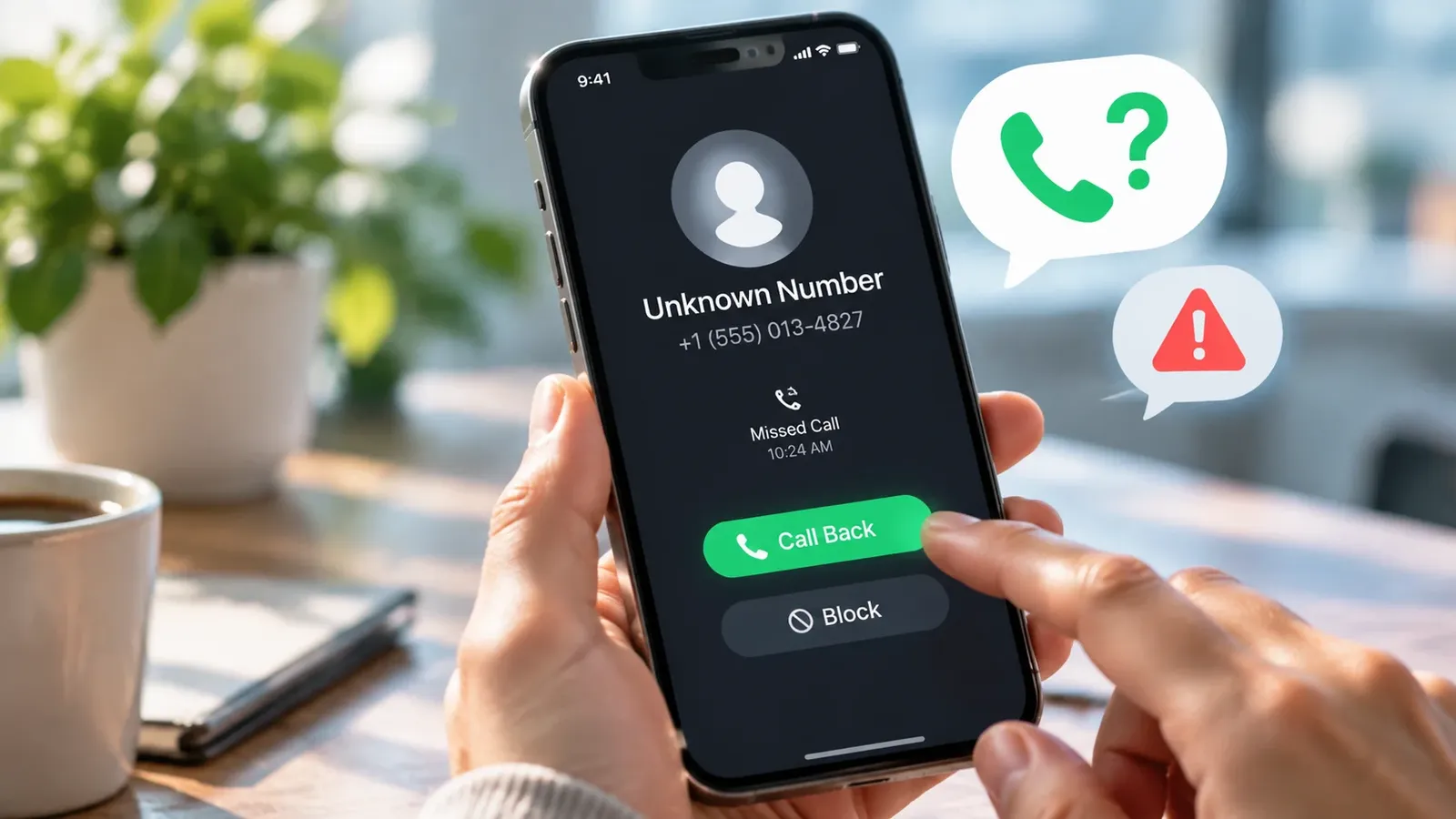
A call that lasts one second can end up costing far more than a call that lasts ten minutes. The FCC's official warning on one-ring phone scams explains why: scammers let your phone ring once, hang up, and wait for curiosity to do the rest, hoping you call back a number that starts billing premium international rates the instant you do.
According to U.S. PIRG's 2025 robocall report, Americans now receive an average of 2.56 billion scam and telemarketing calls every month, the highest volume in six years, and callback traps remain one of the most profitable tactics inside that flood.
A missed call from an unknown number feels harmless enough to ignore or, just as often, harmless enough to return out of simple curiosity. That instinct to call back is precisely what a callback scam is built around. Criminals use missed calls, spoofed caller IDs, and urgent-sounding messages specifically to encourage calling an unknown number back, since a callback often bypasses the caution people naturally apply to incoming calls from strangers.
How Callback Scams Work
Callback scams unfold in a fairly consistent sequence, regardless of the specific story used to bait the victim.
Step 1: The Scammer Creates a Reason to Call Back
The setup for calling back unknown number sources usually takes one of a few familiar forms:
- A missed call with no voicemail left behind, relying purely on curiosity.
- A vague text simply saying "call me back" with no other context.
- A fake urgent notification about an account, delivery, or service issue.
- A suspicious account alert claiming something needs immediate attention.
Each version is designed to create just enough uncertainty that ignoring it feels riskier than checking. The lack of detail is deliberate: a specific, verifiable claim invites scrutiny, while a vague one invites a callback instead.
Step 2: The Caller Uses a Number Designed to Look Trustworthy
Scammers frequently use local number spoofing, fake business caller IDs, or numbers that closely resemble your own area code to make the bait feel more legitimate. A number that looks like it belongs to your city, or close to your own digits, gets treated with far more trust than an obviously foreign or unfamiliar one.
This familiarity is exactly why callback rates are so much higher for spoofed local numbers than for numbers that look clearly out of place.
Step 3: The Callback Becomes the Real Scam
The original missed call or message is rarely the actual scam; it is only the setup for calling back an unknown number the scammer already controls. Once you call back, a scammer may pretend to represent a real company, an automated system may begin collecting information under the guise of "verifying your account," or the caller may apply direct pressure to get you to act right on the call.
In some cases, the conversation simply confirms you are a real, responsive person worth targeting again later.

Why Do People Call Back Unknown Numbers?
People call back unknown numbers for reasons that are completely ordinary and, in most contexts, perfectly reasonable. Plain curiosity about who called is one of the most common drivers, especially when a number looks vaguely familiar or local.
Fear of missing something important plays a role too, along with the very real possibility that the call was actually expected, such as a delivery driver or a service technician confirming details.
Concern that a missed call might signal an emergency adds another layer of pressure, since ignoring a call that turns out to be genuinely urgent feels far worse than wasting a few minutes on a scam.
What Can Happen If You Call Back a Scam Number?
Should you call back an unknown number the moment you notice a missed call? Calling back a scam number rarely ends with just one bad outcome, and several different risks tend to follow from the same single decision.
Your Number May Be Marked as Active
Calling back, even briefly, can signal to a scam operation that your number is actively monitored and used by a real person. Active numbers tend to receive more spam calls afterward, more direct scam attempts, and more targeted messages tailored to whatever information the scammer picked up during the call.
You May Be Connected to a Fake Representative
A common outcome is being connected to someone impersonating a bank's security team, a government office, a delivery company, or technical support. From there, the caller may request account details, one-time verification codes, or other personal information under the guise of resolving whatever issue prompted the original callback.
You May Be Directed Into Another Scam
A single callback can lead directly into a fake website, an unexpected payment request, a remote access scam involving your device, or a wave of follow-up phishing messages. The original call is often just the entry point into a larger, multi-step scam rather than the scam itself.
You May Face Unexpected Charges
Some callback scams connect you to an expensive international or premium-rate number the moment you dial back, with charges accumulating per minute for as long as the call continues. It is worth being especially cautious with unfamiliar area codes, since several premium-rate country and area codes are specifically designed to resemble ordinary U.S. numbers.
- Note: Area codes like 268, 284, 473, 649, 809, 829, and 876 belong to international locations that carry premium per-minute rates, despite formatting that looks identical to a normal domestic number.
Common Types of Callback Traps
The bait changes depending on the scam, but the underlying mechanic, encouraging a callback, stays the same across all of them.
One-Ring Scam Calls
Scammers call briefly and hang up before you have any real chance to answer, leaving only a missed call on your screen. Should you call back an unknown number that only rang once? The entire goal is to trigger curiosity, since the scam depends entirely on you dialing back rather than on anything said during the original call.
Fake Customer Support Callbacks
Messages claiming "your account has suspicious activity," "call us immediately," or "your payment failed" are all designed to route you into calling a number controlled by the scammer. The callback connects you to a fake support agent who is fully prepared with a script built around whatever urgent problem the message described.
Fake Delivery or Service Notifications
Scammers frequently lean on expected, everyday events like packages, appointments, or account issues, since these messages feel entirely believable on their own. A missed delivery notice does not raise red flags by itself, which is exactly why this call-back unknown number tactic works so consistently well.
Personal Emergency Callback Scams
Fake urgent situations, such as a family emergency, a legal problem, or a medical situation, apply direct emotional pressure that reduces careful decision-making almost immediately. This category is especially effective when combined with AI voice cloning technology, which can make a follow-up call sound like someone you actually know.

What to Do Instead of Calling Back Unknown Numbers
A few consistent habits replace the impulse of calling an unknown number back with a safer, more deliberate process.
- Let the call go to voicemail. A legitimate caller with something important to say will almost always leave a message explaining why.
- Check whether the caller left specific information. A vague voicemail with no details is a stronger warning sign than one that names a real appointment, order, or account.
- Wait for a follow-up message if appropriate, rather than assuming a single missed call requires an immediate response.
- Search for verified contact information through the company's official website instead of dialing the number back directly.
- Block repeated suspicious numbers once a pattern becomes clear, especially numbers that call and hang up without ever leaving a message.
- Report scam attempts through your carrier or a government reporting platform, which helps flag the number for other people too.
Quick Tip: Before calling any unfamiliar number back, a quick search of the number itself often surfaces existing reports if it has already been flagged as a scam by other people.
Reviewing how to answer spam calls without giving anything away pairs naturally with these habits for any call you do decide to pick up.
A Few Seconds of Caution Beats a Costly Callback
Calling back an unknown number can turn a harmless-looking missed call into exactly the opening a scammer was hoping for. The entire structure of a callback trap depends on you making that first move, which means the scam simply does not work if calling an unknown number back never happens in the first place.
A few seconds spent checking a number, waiting for a real message, or searching for verified contact information can prevent a much bigger problem than the minor inconvenience of an unanswered call.
Calling back unknown number sources without checking first is the one habit that makes every callback trap in this guide possible.
Want to check an unfamiliar number before calling it back?
Try Sync.me's caller ID and reverse phone lookup to identify unknown numbers and flag known scam callers automatically, free to download on iPhone and Android.
Frequently Asked Questions
Is it safe to call back an unknown number?
Should you call back an unknown number without any verification first? It depends entirely on the number and the context, but calling back blind carries real risk, especially for missed calls with no voicemail. Searching the number or waiting for a follow-up message is almost always safer than dialing back immediately, and understanding what actually happens when you answer a scam call makes the risk easier to weigh.
Are all missed calls from unknown numbers dangerous?
No, plenty of missed calls come from legitimate sources like delivery drivers, service providers, or new contacts who simply have not been saved yet. Deciding whether to call back an unknown number safely comes down to context: the safest approach is treating unexplained, vague missed calls with more caution than ones tied to something you were already expecting.
Why do scammers use local numbers for callback traps?
Local numbers, including spoofed ones, get answered and called back far more often than numbers that look clearly foreign or unfamiliar, since people naturally extend more trust to what looks nearby. This overlaps closely with patterns seen in spam calls from unfamiliar or international numbers designed specifically to look local at a glance.
How can I check whether a phone number has been reported as a scam?
A quick search of the number online often surfaces existing scam reports from other people, and dedicated caller ID or reverse lookup tools can confirm this even faster before you call back an unknown number yourself. Checking before calling back takes only a few seconds and can prevent a much costlier mistake.
Can scammers target me again after I call back once?
Yes, a single callback can mark your number as active and responsive, which frequently leads to more spam calls, more scam attempts, and more targeted follow-up messages. This is part of why avoiding the callback in the first place matters more than dealing with the consequences afterward.
Posts relacionados
Why Are You Getting So Many Spam Calls? 7 Common Reasons
Getting so many spam calls lately? Discover the 7 real reasons your number keeps ringing and what you can do to stop them with Sync.me.
How to Prevent Spam Calls: 5 Habits That Reduce Risk
Learn how to prevent spam calls with 5 practical habits. Reduce your exposure, stop attracting robocallers, and take control of your phone.
How to Identify an Unknown Caller? Simple Methods That Work
Discover simple ways to identify unknown callers using phone tools, apps, reverse lookup services, and online searches. Avoid scams and missed calls.