7 Common Problems You Can Avoid When You Update Contacts
Nearly seven in ten people have skipped an important call because it came from an unfamiliar number, only to find out later it was actually legitimate. TransUnion's August 2024 survey on consumer calling behavior found exactly that: 70% of respondents avoided a call over safety or fraud concerns and later learned it was someone they actually needed to hear from.
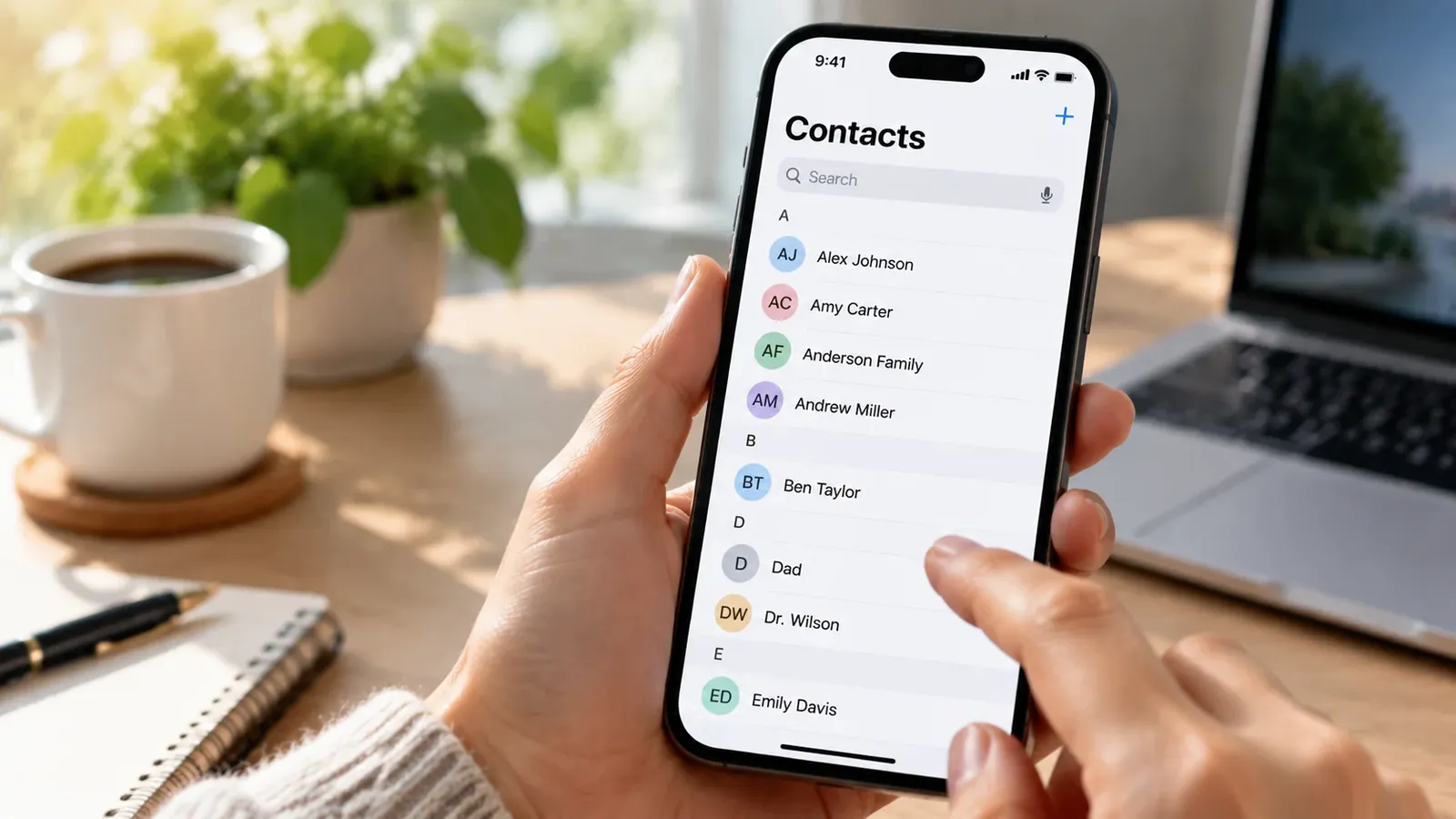
Contact lists quietly become outdated over time as people change phone numbers, switch jobs, move locations, or update how they prefer to communicate. Most of these small changes never make it into a saved contact, and the gap between what is saved and what is actually current is exactly where everyday problems start. None of these problems require a major fix, but they do add up quietly if left unattended for too long.
Why Keeping Contacts Updated Matters
A contact list is not just a phone directory. It helps you recognize who is calling, communicate faster, and avoid the kind of confusion that turns a simple call into a guessing game about who is actually on the other end.
Contact information becomes outdated for a few predictable reasons: people change numbers, businesses update their contact details, friends and family move or switch providers, and duplicate contacts quietly accumulate over months or years.
Beyond convenience, outdated contacts can directly affect phone safety, since inaccurate information makes it harder to tell a trusted caller apart from an unfamiliar one. A regular contact list update is one of the simplest ways to catch these gaps before they cause a real problem, and organizing your contacts by category makes the process considerably faster.
7 Problems You Can Avoid by Updating Your Contacts
Each of these seven problems traces back to the same root cause: a contact list that no longer matches reality. Choosing to update contacts regularly prevents all seven from becoming a recurring headache, and most of the fixes take only a few minutes once you know where to look.
1. Missing Important Calls From People You Know
An outdated number attached to the wrong name can cause missed calls from friends, family, work contacts, or even a scheduled appointment reminder. When a trusted contact calls from a new number that was never updated, the call simply looks unfamiliar and gets ignored, sometimes for weeks before anyone realizes what happened.
- Quick Tip: Save a new number the moment you learn about it, ideally right in the conversation where someone mentions the change, rather than relying on memory later.
Updated contacts help you recognize important calls immediately, and unknown numbers become much easier to confidently ignore once your trusted contacts are properly saved and current.

2. Confusing Unknown Callers With Trusted Contacts
Incorrect or incomplete contact information makes it genuinely harder to identify who is actually calling. A few common examples show up constantly:
- An old number still attached to a name, even though the person switched carriers.
- A business contact saved without its actual name, just a number.
- A contact saved with minimal details, making it indistinguishable from an unknown caller.
Accurate contact information closes this gap directly, improving caller recognition enough that a glance at the screen is actually reliable again.
3. Creating Duplicate or Outdated Contact Entries
Duplicate contacts tend to build up from a few common sources:
- Saving the same person more than once under slightly different names.
- Importing contacts from a different device without checking for overlap.
- Syncing multiple accounts that each contain their own version of the same contact.
Duplicates create their own set of problems, including choosing the wrong saved number, sending a message to an outdated account, and struggling to search your contacts effectively when three near-identical entries show up for the same person.
Merging duplicate contacts without losing important information resolves this directly, and understanding why duplicate contacts accumulate in the first place makes it easier to prevent the same buildup going forward.
4. Accidentally Sharing Information With the Wrong Person
Outdated contacts create genuine privacy risks, not just inconvenience. Sending a message to an old number, sharing a file with the wrong recipient, or calling someone who no longer owns that number are all realistic outcomes of a contact list that has not been reviewed in a while.
- Note: Recycled phone numbers make this risk worse over time, since a number you have saved may now belong to a completely different person than the one you originally saved it for.

5. Struggling to Recognize Legitimate Business Calls
Outdated business contacts make people noticeably less confident about answering calls, even when the call is completely legitimate. Doctor's offices, banks, delivery services, and work contacts are among the most common examples where an old or missing entry creates unnecessary hesitation, often leading to a legitimate call going straight to voicemail out of caution.
Updated business information helps separate expected calls from genuinely suspicious ones, which matters more given how often scam calls now imitate exactly these kinds of organizations.
6. Losing Important Information When Switching Devices
Outdated or incomplete contact lists create real friction when moving to a new phone, changing operating systems, or restoring a backup that turns out to be older than expected. Missing or duplicate entries at this stage often mean permanently losing details that were never re-saved elsewhere.
Consistent contact syncing, regular cloud backups, and periodic contact reviews all reduce this risk substantially. An updated contact list makes any device transition considerably smoother, since there is far less to reconstruct from memory afterward, whether you're moving to a new iPhone or Android device.
Backing up and syncing your contacts before it's too late covers exactly this scenario in more detail, including what to do if a backup turns out to be incomplete.
7. Reducing the Accuracy of Caller Identification
Contact databases and caller identification tools work significantly better when the personal contact information behind them is accurate. Outdated details can throw off contact matching, weaken caller recognition, and generally make your communication less organized than it should be. A simple contact list update on a regular schedule keeps this matching process working the way it is supposed to.
This connects directly to safer calling decisions: knowing who is calling, recognizing a genuinely suspicious number, and avoiding unnecessary callbacks all depend on the accuracy of the contact information sitting behind the scenes. Features like customizable caller screens that highlight important calls only work as well as the contact data feeding into them.
Which Contacts Should You Update First?
Updating every contact at once is rarely realistic, so prioritizing the most important ones first delivers the biggest benefit for the least effort. Think of this as the first pass of a larger contact list update rather than a complete overhaul you need to finish in one sitting.

Starting with this list before moving on to less frequently contacted numbers means the highest-value updates happen first.
How Updated Contacts Improve Phone Safety
Accurate contacts help you recognize trusted callers at a glance, avoid unnecessary callbacks to unfamiliar numbers, and notice unusual communication patterns that might otherwise slip by unnoticed. An updated contact list connects directly to modern phone risks, including spam calls, caller ID confusion, and impersonation attempts that specifically rely on uncertainty about who is really calling.
Sync.me helps identify unknown callers, improves overall contact awareness, and supports safer communication decisions by giving you more context before you decide whether to answer, ignore, block, or verify a call.
A Small Maintenance Task With an Outsized Payoff
Updating contacts is a simple maintenance task, but it prevents a surprising number of everyday communication problems all at once. Fewer missed calls, better caller recognition, less day-to-day confusion, and a more organized way of communicating all follow directly from the same small habit. Choosing to update contacts on a regular schedule, rather than only when something breaks, is what actually makes the difference over time.
An accurate contact list helps you stay connected to the people who actually matter and make safer, more confident decisions about the calls that show up unannounced.
Want extra confidence identifying calls even when a contact isn't saved?
Try Sync.me's caller ID and contact tools to recognize callers and flag suspicious numbers automatically.
Frequently Asked Questions
How often should I review and update my contact list?
A quick review every few months catches most outdated entries before they cause a real problem, though updating a number the moment you learn about a change is even more effective. Busy periods like a job change or a move are also good natural checkpoints for a fuller review.
What is the safest way to remove old contacts without losing important information?
Back up your contact list before deleting anything, then remove entries you are confident are outdated or duplicated. Reviewing when it's actually time to delete an old contact helps avoid removing something you might need later.
Can outdated contacts affect caller ID accuracy?
Yes, caller identification relies partly on accurate contact data to match incoming numbers correctly. Outdated entries can weaken this matching, making it harder to distinguish a trusted caller from an unfamiliar one at a glance.
How can I prevent duplicate contacts when switching phones?
Review your contact list for duplicates before transferring it to a new device, rather than after, since merging after the fact is usually more time-consuming. Starting the transfer with an already updated contact list, rather than cleaning it up afterward, also significantly reduces the cleanup required once you are set up on the new device.
What contact information should I always keep updated for emergencies?
Prioritize direct phone numbers for immediate family, a designated emergency contact, and your primary healthcare provider, since these are the entries most likely to matter in a genuine emergency. Reviewing these specific entries every few months is a reasonable standard even if the rest of your contact list gets less frequent attention.
Articles similaires
5 Smart Ways to Organize Your Contacts by Category, Company, or Group
Discover effective ways to organize your contacts. Boost productivity, reduce errors, and keep your address book clean and easy to navigate.
When Should You Delete Old Contacts? 7 Signs It's Time to Hit Remove
Should you delete old contacts? Learn 7 signs your address book is too cluttered, how to safely clean it up, and how to protect your important data.
7 Best Ways to Sync Contacts Across Multiple Devices
Discover 7 best ways to sync contacts across multiple devices, from cloud services to third-party apps and manual export. Practical methods explained.