Spoofing vs Phishing: What Is the Difference Between Them?
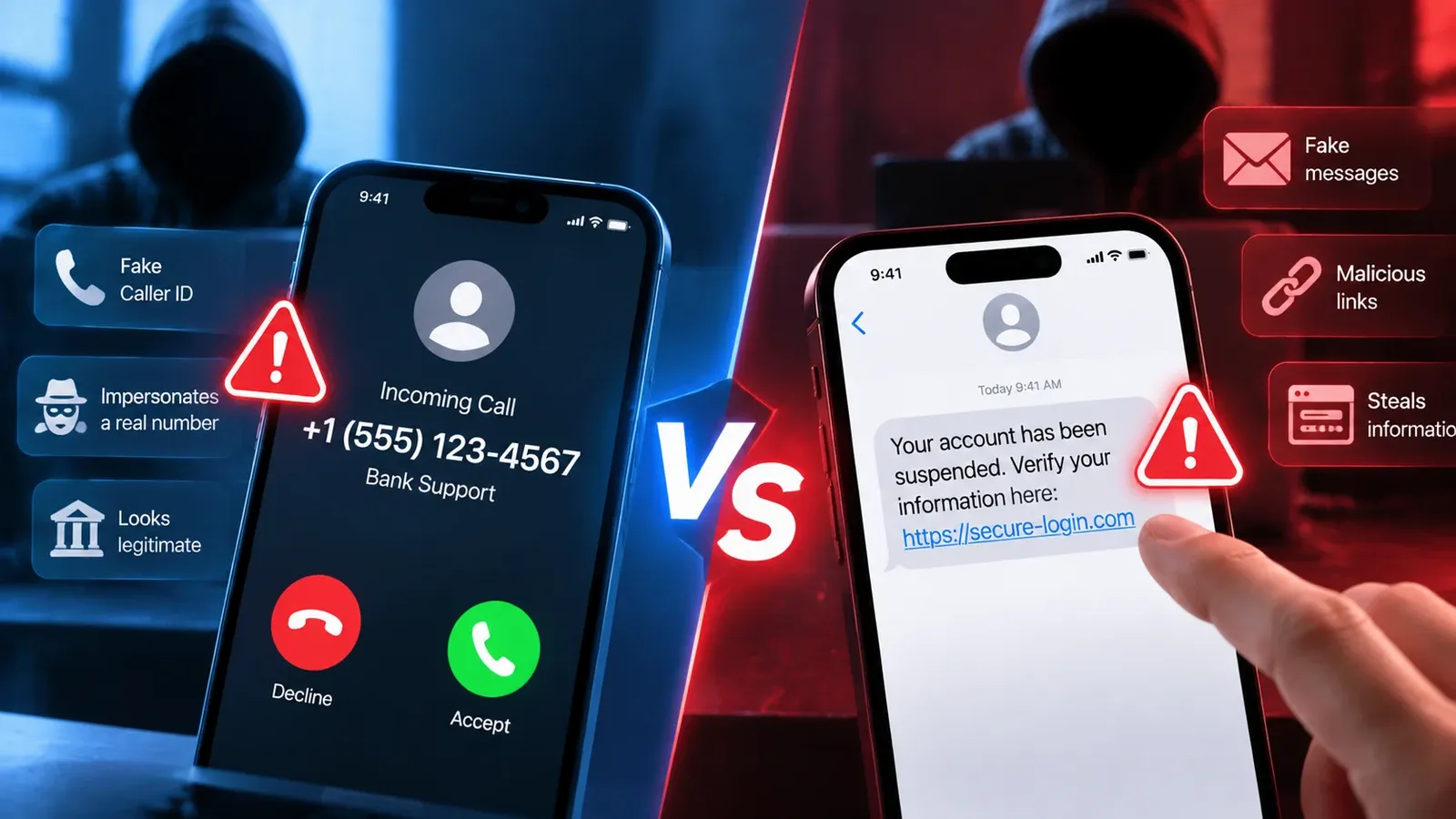
Spoofing is about faking an identity, while phishing is about manipulating someone into taking an action. The distinction matters because scammers frequently combine both techniques in the very same attack, and knowing which one is happening at a given moment helps you respond correctly. Phishing and spoofing are often treated as interchangeable terms, but they describe two separate steps in what is often the same scam.
In August 2025, the FCC's Enforcement Bureau removed more than 1,200 non-compliant voice service providers from its Robocall Mitigation Database, cutting them off from the U.S. phone network for failing to prevent illegal robocalls, many of which rely on spoofed caller ID to appear trustworthy. Spoofing and phishing are often mentioned together for good reason: a scam call may use a spoofed number to look legitimate, then rely on phishing tactics once you answer to actually steal something.
Spoofing is about changing what you see. Phishing is about changing what you do. Understanding the difference between spoofing and phishing makes it much easier to recognize an attack before it succeeds.

What Is Spoofing?
Spoofing is a technique where scammers disguise their identity to appear as a trusted person, company, phone number, email address, or website. The goal is entirely about appearance: spoofing focuses on changing what the victim sees rather than directly stealing any information on its own.
Common spoofing examples include:
- Fake caller ID, showing a number or name that does not belong to the actual caller.
- Email address spoofing, where the sender field is altered to look like a trusted contact or company.
- Website spoofing, using a domain and design built to imitate a real site closely.
- Text message sender spoofing, making a message appear to come from a short code or saved contact.
How Phone Number Spoofing Works
Scammers can make a call appear to come from a local number, a bank, a government agency, a business, or even a number already saved in your contacts. Phone number spoofing manipulates the caller ID information transmitted with the call, not the actual origin of the call itself. This overlaps closely with patterns seen in spam calls from unfamiliar or international numbers, where the displayed number rarely matches where the call is actually coming from.
- Quick Tip: Seeing a familiar number does not always prove who is actually calling. If anything about the call feels off, hang up and call the number back using contact information you already trust.
Spoofing works because people are naturally more likely to answer a call that looks familiar. A number that appears to be a local business or a known contact gets picked up far more often than one clearly marked unknown.

What Is Phishing?
Phishing is a social engineering attack designed to make people reveal information, click a malicious link, send money, or grant some form of access. Unlike spoofing, phishing relies on manipulation and persuasion rather than simply disguising an identity.
Phishing shows up across several common channels: email, SMS (commonly called smishing), phone calls (vishing), and social media messages. The channel changes, but the underlying goal of getting someone to act stays consistent across all of them.
What Phishing Attacks Usually Try to Steal
Phishing attempts typically target a fairly consistent set of valuable information:
- Passwords and login credentials.
- One-time verification codes.
- Banking details and card numbers.
- Personal information, such as an address or date of birth.
- Direct account access.
- Payment information used for fraudulent charges.
Spoofing vs Phishing: The Main Differences
Comparing spoofing vs phishing side by side, and looking closely at the difference between spoofing and phishing in practice, makes the distinction much clearer than describing either one alone.

Their Main Purpose
Spoofing exists to create a false identity or appearance, making communication look trustworthy at a glance. Phishing vs spoofing differs sharply in intent here, since phishing exists specifically to encourage an action, whether that means stealing information, money, or access.
How They Target Users
Spoofing targets perception, essentially answering the question of who appears to be contacting you. Phishing targets behavior instead, focused entirely on what the attacker can convince you to actually do once contact is made.
What Happens During an Attack
During spoofing, what changes is caller ID, sender details, or a website's outward appearance. During phishing, what happens is a message, a conversation, or a fake page designed specifically to collect information from you.
Level of Interaction Required
Spoofing may happen before you do anything at all, since a spoofed number or sender field is already in place the moment contact is made. Phishing usually requires some form of response, whether that is clicking a link, replying to a message, sharing information, or making a payment.
- Note: This is a big part of why spoofing alone is not necessarily dangerous. The real risk starts once phishing tactics ask you to act on what you are seeing.

How Spoofing and Phishing Work Together
Many modern scams combine both techniques into a single, more convincing attack. Recognizing common smishing and vishing tactics makes it easier to spot the moment phishing and spoofing start working together, since the examples below show how they typically pair up in practice.

Fake Bank Calls
A spoofed caller ID makes the call appear to come directly from your bank's real phone number. Once you answer, the phishing component takes over, with the caller asking for login details or a verification code under the guise of confirming your identity, a pattern closely related to how to answer spam calls without giving anything away.
Fake Delivery Messages
A spoofed sender field makes a text look like it came from a delivery company you actually use. The phishing component follows immediately, directing you to a fake payment or tracking page designed to capture your card details.
AI Voice and Family Emergency Scams
Spoofing in this scenario may go beyond a phone number, using cloned audio to make a caller sound like someone you know. AI voice cloning technology has made this version of spoofing significantly more convincing in recent years, and the phishing component follows quickly as the scammer pressures the victim to send money or reveal sensitive information under emotional pressure.
The Safest Approach When You're Not Sure
A few consistent habits cover nearly every situation where spoofing and phishing overlap:
- Question any unexpected communication, even if it looks like it comes from someone familiar.
- Verify identity independently, through a number or website you already trust rather than one provided in the contact itself.
- Avoid sharing sensitive information until you have confirmed who you are actually talking to.
Recognizing typical smishing and vishing tactics makes these habits easier to apply consistently, since the same patterns tend to repeat across different scams. Sync.me's caller ID and spam protection for both iPhone and Android adds another layer of context, flagging known spoofed or scam numbers before you decide whether to answer.
Different Tactics, Same Underlying Goal
Spoofing and phishing are different techniques, but they very often work together rather than in isolation, which is why phishing and spoofing tend to get lumped together in everyday conversation even though they solve different problems for a scammer. Spoofing changes what you see; phishing changes what you do, and the two combine into some of the most convincing scams currently in circulation.
Knowing the difference between spoofing and phishing makes both easier to recognize before either one succeeds. Framing it as phishing vs spoofing rather than one single blurry threat helps you ask the right question in the moment: is this about who appears to be contacting me, or about what they are asking me to do?
A spoofed number should never be treated as proof of identity, and any request for money or sensitive information deserves independent verification regardless of how legitimate the contact appears.
Want to check whether an unfamiliar number might be spoofed or flagged as spam?
Try Sync.me's caller ID and spam protection to identify unknown callers and known scam numbers automatically.
Frequently Asked Questions
Can spoofing happen without phishing being involved?
Yes, spoofing can occur on its own, such as a prank call or a robocall that never asks for anything. On its own, spoofing changes appearance without necessarily attempting to steal information or money.
Can phishing happen without spoofing?
Yes, phishing attempts frequently use an unspoofed, unfamiliar number or a clearly external email address rather than disguising identity at all. When thinking about phishing vs spoofing, it helps to remember that manipulation tactics in phishing do not strictly require a faked identity to work.
How can I tell if a caller ID number has been spoofed?
There is no foolproof way to confirm spoofing just by looking at the screen, since spoofed numbers can appear completely normal. Hanging up and calling the number back using contact information from an official source is the most reliable way to check.
Why do scammers use real company names in spoofed calls?
Real company names and numbers carry built-in trust that scammers want to borrow instantly, since people are far more likely to answer and cooperate with a familiar-looking caller. This trust is exactly what makes the follow-up phishing attempt more likely to succeed.
What should I do if a scammer uses my identity to contact others?
Warn your contacts directly that your number or email may have been spoofed, since they may receive suspicious messages that appear to come from you. Reporting the incident to your phone carrier or email provider can also help limit further misuse.
Ähnliche Beiträge
How Phone Number Spoofing Works and Why It's Difficult to Detect
Phone number spoofing makes caller ID unreliable. Learn how phone number spoofing works, why it's so hard to spot, and how to verify a real caller.
What Is a Common Indicator of a Phishing Attempt? 10 Signs You Should Recognize
Learn what a common indicator of a phishing attempt is and spot 10 warning signs, including suspicious links, fake senders, urgent requests, and scam calls.
Spam vs Phishing Explained: Similarities, Differences, and Risks
Learn the difference between spam vs phishing, including how scams work, what attackers want, common warning signs, and how to stay safer online.