WhatsApp Scam Message: 9 Red Flags That Give It Away
FTC data show that WhatsApp ranked second among social media platforms for reported scam losses in 2025, at about $425 million, behind only Facebook. The figures come from the FTC's April 2026 data spotlight on social media scams, which also found that nearly 30% of people who lost money to a scam said it started on social media.
A WhatsApp scam message rarely looks like a scam. It can read like an ordinary chat, a delivery update, a job offer, or a note from someone you know. Most scam WhatsApp messages succeed through urgency, impersonation, and trust, and few of them need any technical trick at all. Once you know the red flags, scam messages on WhatsApp become much easier to spot.
9 Red Flags That Reveal a WhatsApp Scam Message
Any one of these signs is reason enough to stop and check, and two or three together almost always point to a scam. The table is a quick reference, and the sections below explain each sign.

1. The Message Creates Urgency or Fear
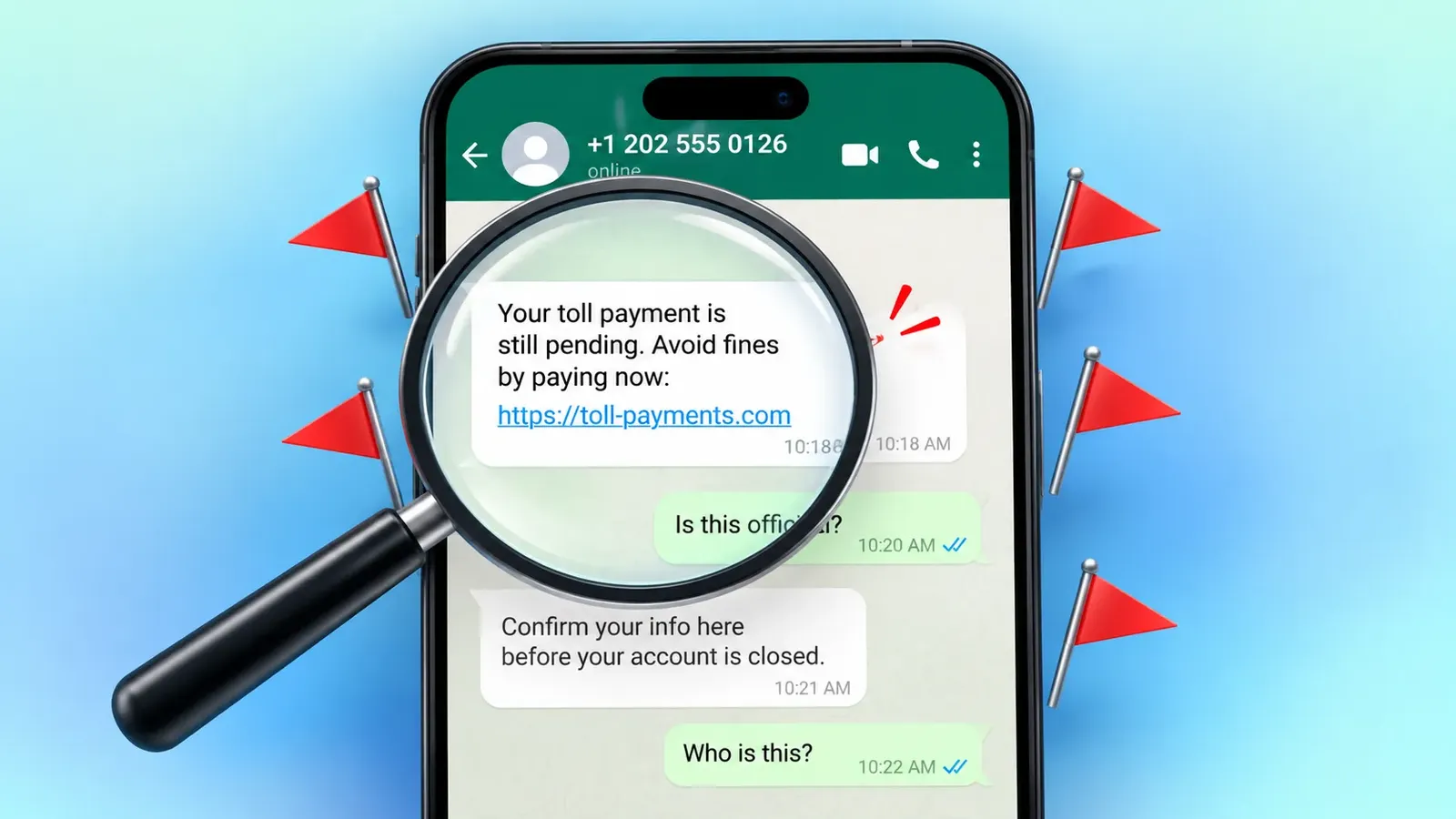
Scam messages often threaten account suspension, claim an urgent payment is due, or demand immediate action. The deadline is the weapon, because it leaves no time to check whether the claim is real. This is the same pressure play used in typical smishing and vishing scams.
"Your account will be blocked in 24 hours. Confirm your details now to keep it active."
Real problems can wait a few minutes. A genuine company also has other ways to reach you, so a threat that arrives only in a chat deserves extra suspicion. Open the official app or website yourself to check, and skip any link in the message.

2. Someone You Know Suddenly Asks for Money
A message claims that a friend or relative needs emergency financial help. The sender may write from a new number, ask for an unusual payment method, insist on secrecy, or refuse to speak by phone. AI voice cloning can make a voice note sound like someone you know, which adds to the pressure.
Scammers choose this story because it works on kindness. A request from someone you care about feels urgent, and people often act before they think about how unusual it is.
"Hi, I'm in trouble and can't talk right now. Can you send money today? Please don't tell anyone."
Verify the request using a number you already have or another trusted channel before you send anything.

3. The Sender Requests Your Verification Code
Scammers use WhatsApp registration codes and other security codes to take over accounts. They often claim they sent the code to you by mistake, or say they need it to confirm something. WhatsApp sends a registration code by SMS when someone tries to register your number, so a stranger asking for one is a clear warning.
With that code, they can register your number on their own phone and message your contacts as you. Never share your registration code or your two-step verification PIN with anyone.
If you already shared a code, act fast:
- Register your number again on your own phone, which logs the attacker out.
- Turn on two-step verification and add a recovery email.
- Warn your contacts that recent messages from your number were not from you.
4. The Message Contains a Suspicious Link
Suspicious links lead to fake login pages, fraudulent payment portals, bogus giveaways, and imitation WhatsApp websites. These links work like the ones in smishing scams, which hide behind routine-looking text. Shortened links make this harder to judge, because they hide the real destination until you tap. On many phones, pressing and holding a link shows its full address before you open it.
- Note: A familiar brand name inside a link does not make the destination real. Scammers copy names and logos, and they change a letter or two in the web address.
Open the official app or type the website address yourself when a message asks you to log in, pay, or verify something.
5. An Offer Promises Easy Money or Guaranteed Returns
Fake jobs, paid online tasks, investment groups, cryptocurrency schemes, and unrealistic prizes all use the same bait. Scammers may share fabricated testimonials or send a small first payout to win your trust before they ask for money.
Scam WhatsApp messages like these often arrive from numbers you do not know, with a friendly greeting and a promise of flexible, well-paid work. The FTC found that investment scams caused the largest losses among social media scams in 2025, including WhatsApp groups filled with fake testimonials.
Any request to pay before you can earn is a major warning sign. Research the offer independently before you reply.
6. The Sender Claims to Represent WhatsApp or Another Trusted Organization
Scammers impersonate WhatsApp support, banks, delivery companies, government agencies, and popular brands. The messages include threats, unexpected account warnings, and requests for sensitive information.
Scam messages on WhatsApp often copy official logos and polished wording, so appearance alone proves nothing. A real bank or support team will not ask for your PIN or a one-time code in a chat.
Common impersonations include:
- WhatsApp support or security teams
- Your bank or payment service
- Delivery and courier companies
- Government agencies
- Popular online brands
Check any alert through the relevant official app or website.

7. You Receive an Unexpected File or App Download
Watch for unfamiliar documents, APK files, fake app updates, and attachments that come with instructions to install software. These files can carry malware, steal information, or give someone unauthorized access to your device.
Scammers often describe the file as a document, an invoice, or an urgent update so that opening it feels routine. Your phone may warn you before installing an app from an unknown source, and that warning is worth taking seriously. Skip unexpected downloads, and install apps only from trusted app stores.
8. The Conversation Starts With a Strange Wrong-Number Message
A casual greeting or an apparent mistake, such as "Sorry, wrong number," is a common way to start a conversation. If you reply, the chat can slowly turn into personal questions, an investment pitch, or a request to move to another platform.
Scammers can message hundreds of numbers at once and wait to see who answers, so a reply tells them your number is active. These openers often come from unfamiliar or international numbers.
A wrong-number message is not automatically fraudulent. An unexplained conversation that quickly turns manipulative deserves caution, so stop replying and block the number.
9. The Sender Pressures You to Keep Things Secret
Scammers discourage you from talking to relatives, your bank, coworkers, or official support. Phrases such as "Do not tell anyone" or "Your bank will only slow this down" make independent checks feel unnecessary or dangerous.
Secrecy keeps the one person who might spot the scam out of the conversation, and a quick chat with a relative, a coworker, or your bank often ends the scam in seconds. Pressure to hide a financial request or a security issue is a strong warning sign.
- Quick Tip: When a message says "don't tell anyone," tell someone you trust.

How Sync.me Can Help With Scam-Related Phone Calls
A WhatsApp scam message is sometimes only the first step. The same scammer may follow up with a regular phone call or ask you to call a number back, and that call can come from an unfamiliar number that looks harmless at first.
Sync.me's caller ID and spam protection helps you identify unknown callers and flags known spam and scam calls before you answer. Its reverse phone lookup lets you check a number that contacted you after a missed call or a WhatsApp message.
Treat caller identification as extra context. It adds useful information to a decision and works best alongside your own checks, so a familiar-looking number or a friendly voice still needs independent verification.
Learn how to answer spam calls safely if one does get through.
Nine Signs, One Habit: Pause Before You Reply
The nine red flags are urgent demands, money requests from familiar names, verification-code requests, suspicious links, easy-money offers, fake trusted organizations, unexpected files, strange wrong-number chats, and pressure to keep secrets.
Every WhatsApp scam message leans on at least one of them, and scam WhatsApp messages become easier to spot once you know the pattern. Scam messages on WhatsApp work best when you reply quickly, and the habit of pausing takes that advantage away.
The safest response is to pause, verify independently, and avoid sharing money or sensitive information under pressure. A familiar name or a convincing message is not proof of identity.
Want to check unfamiliar numbers before you reply or answer?
Download Sync.me for free for iPhone or Android to identify unknown callers and flag scam numbers.
Frequently Asked Questions
Can a WhatsApp scammer see my phone number if we share a group?
Yes, members of most groups can see each other's phone numbers, so a scammer who joins or is added can see yours. Leave groups you do not recognize, and review the privacy setting that controls who can add you to groups.
Does a WhatsApp profile photo prove that the account belongs to the person shown?
No. Anyone can save a public photo and use it on a fake account, so a familiar picture is not proof of identity. Call the person on a number you already have before you act on a request.
Can I report a WhatsApp scam if the sender has already deleted the message?
Yes, you can still report the chat or the contact from the chat screen. A message deleted for everyone no longer shows its content, so take a screenshot of scam messages before you block, and report the scam at ReportFraud.ftc.gov.
Will blocking a scammer prevent them from contacting me from another number?
No. Blocking applies to one number, and scammers can message from a new one. Report the account, keep your privacy settings tight, and treat every unfamiliar number with the same caution.
How can I check whether a WhatsApp message has been forwarded to many people?
WhatsApp labels forwarded messages with "Forwarded," and a message passed along through a long chain of chats shows "Forwarded many times." A forwarded label does not tell you whether the content is true, so check any claim independently.
مقالات ذات صلة
Can You Get WhatsApp Scams? 7 Risks You Should Know
Learn how WhatsApp scams work, spot 7 common risks, and protect your account from phishing links, fake job offers, account takeovers, and fraud.
How to Prevent Spam Text Messages: 8 Simple Habits to Follow
Learn how to prevent spam texts with 8 practical habits, including protecting your number, using filters, avoiding risky links, and reducing unwanted messages.
How to Report Spam Numbers and Protect Others from Scammers
Learn how to report spam numbers, where to submit spam phone reports, and how community reporting helps improve spam call detection and protection.