What Is a SIM Swap Scam? Signs, Risks, and Prevention Tips
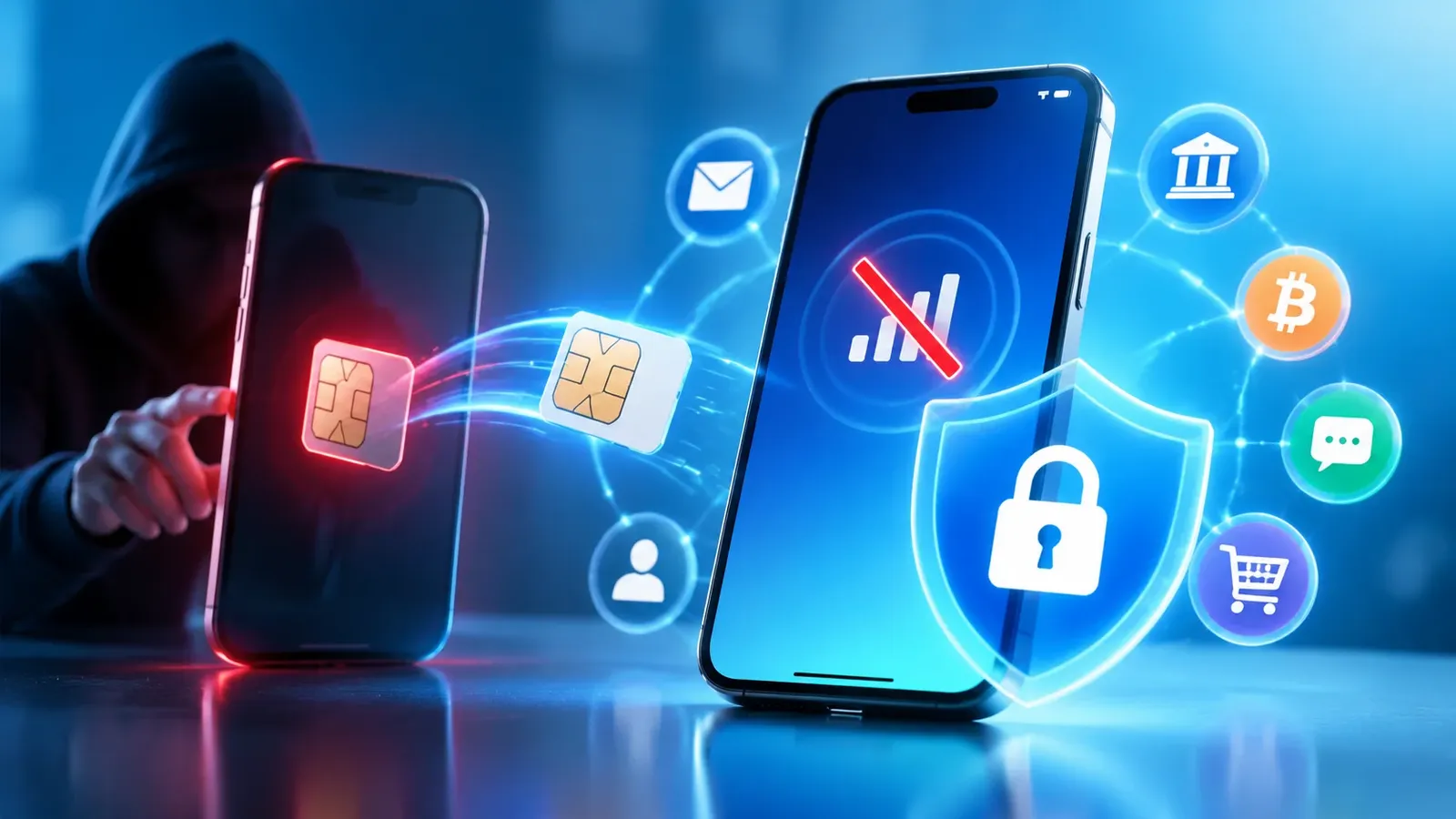
A SIM swap scam happens when criminals convince your mobile carrier to transfer your phone number to a SIM card they control, cutting you off from your own number and opening the door to your accounts. Losing access to your phone number can become the first step toward losing access to almost everything connected to it.
The FBI's Internet Crime Complaint Center logged 982 SIM swap complaints in 2024, totaling nearly $26 million in reported losses across the United States, according to its 2024 Internet Crime Report. Those numbers only capture complaints that were actually reported, and they do not include the downstream damage once an attacker gains control of email, banking, or cryptocurrency accounts tied to the stolen number.
Understanding what SIM swap scam behavior looks like in practice, rather than just the definition, is what actually helps you recognize one before it does serious damage.
What Is a SIM Swap Scam?
SIM swapping is a form of account takeover where a scammer moves your phone number to a different SIM card or eSIM, without ever needing physical access to your phone. If you are asking what SIM swap scam activity actually involves day-to-day, the short answer is impersonation: the attacker convinces your carrier that they are you, and the carrier does the rest of the work by activating your number on a device the scammer controls.
This is different from a few related but separate problems. Losing a phone means the device is gone, but your number still belongs to your original SIM. Having a SIM card physically stolen requires someone to take the card itself out of your device. A SIM swapping scam requires neither; it relies entirely on social engineering aimed at a customer service representative rather than any physical theft.

How Does a SIM Swap Scam Work?
A SIM swapping scam usually unfolds in three distinct stages, each building on the one before it.
Step 1: Scammers Collect Personal Information
Attackers gather the details needed to convincingly impersonate a victim before ever contacting a carrier. Common sources include:
- Information exposed in past data breaches.
- Details pulled from public social media profiles.
- Public records, such as addresses or birth dates.
- Phishing messages designed to extract personal details directly.
- Information gathered from earlier, unrelated scam interactions.
Small pieces of information rarely seem dangerous on their own, but combined together they can form a convincing identity profile that passes a carrier's verification questions during a SIM card swap scam attempt.
Step 2: Scammers Trick the Mobile Carrier
With enough personal information in hand, the scammer contacts the mobile carrier while posing as the account owner. Common tactics include providing fake identity verification, reciting stolen personal details convincingly, or claiming the phone was lost or damaged and needs a replacement SIM. Some attackers go further, using voice cloning techniques to sound more convincing to a carrier representative on the phone.
- Quick Tip: A carrier account PIN adds a verification step that stolen personal details alone usually cannot satisfy, which is exactly why it matters so much in this stage of the scam.
The goal at this stage is singular: get the victim's number moved to a SIM card the attacker physically controls.
Step 3: The Attacker Takes Over Accounts
Once the swap succeeds, calls and texts intended for the victim redirect straight to the attacker's device. Password reset codes sent by SMS can be intercepted, and any account tied to that phone number instantly becomes a target.
Common targets include:
- Email accounts, often the gateway to resetting everything else.
- Banking and financial accounts.
- Cryptocurrency wallets and exchange accounts.
- Social media accounts.
- Online shopping accounts with saved payment methods.

Why Are SIM Swap Scams So Dangerous?
A SIM swap scam is dangerous because a phone number often functions as a digital identity key, not just a way to make calls. Once an attacker controls that key, several serious risks follow at once:
- Account takeover across email, banking, and social platforms.
- Financial fraud, including drained bank accounts and unauthorized transactions.
- Identity theft using the personal details collected during the attack.
- Loss of access to services that rely on the number for recovery.
- Privacy exposure, since the attacker can read incoming messages meant only for you.
Relying only on SMS-based verification adds risk precisely because it assumes the phone number itself is secure. A successful SIM swap scam text message or carrier call defeats that assumption entirely.
Common Signs You May Be a Victim of a SIM Swap Scam
Recognizing a SIM swap scam early can limit how much damage it causes. A few warning signs tend to appear together rather than in isolation.
Your Phone Suddenly Loses Service
An unexpected "no service" message, dropped calls, or an inability to send texts can happen for ordinary reasons like a carrier outage. Sudden service loss combined with unusual account activity elsewhere is the combination that should raise real concern.
You Receive Unexpected Account Notifications
Alerts about password changes, new device logins, security updates, or verification attempts you did not initiate may indicate someone is actively trying to access your accounts. These notifications are often the first visible sign something is wrong.
Your Accounts Behave Differently
Beyond notifications, direct changes to your accounts are a stronger signal something has already happened:
- Being locked out of an account you use regularly.
- Recovery settings, like a backup email, that you did not change.
- Unknown transactions on a connected financial account.
- Messages sent from your accounts that you never wrote.
Friends Receive Strange Messages From You
Attackers frequently use a compromised number or account to run additional scams against your contacts. If friends or family mention receiving odd messages from you, it is worth warning them immediately and checking your own accounts right away.
Sudden Service Loss: Normal Issue or Warning Sign?

What Information Do SIM Swap Scammers Usually Want?
Scammers typically gather information gradually, often through several smaller attacks rather than one single breach.
- Personal details: Full name, date of birth, home address, account information
- Login details: Passwords, security question answers, verification codes
- Financial information: Banking details, payment card information

How to Prevent a SIM Swap Scam
Add Extra Security to Your Mobile Account
A few carrier-level protections make it significantly harder for scammers to impersonate you:
- Set a carrier account PIN separate from any password used elsewhere.
- Enable any additional identity verification steps your carrier offers.
- Review your account security settings periodically to confirm nothing has changed.
Avoid Sharing Personal Information Online
Oversharing personal details makes it easier for attackers to answer the exact identity verification questions a carrier might ask. Public social media details, an exposed phone number, and casual online forms all contribute to the profile a scammer builds over time.
Use Stronger Authentication Methods
SMS codes are convenient, but they are not always the strongest option available. Authentication apps, physical security keys, and biometric verification all avoid relying on your phone number as the single point of failure.
- Note: Where a service offers authentication app or security key options instead of SMS, switching removes the exact vulnerability a SIM swap is designed to exploit.
Be Careful With Unexpected Calls and Messages
Phishing frequently comes before SIM swapping, since it is how attackers gather the details needed for step one. Fake carrier support messages, unsolicited requests for personal details, and urgent account warnings are all common precursors, similar to the patterns seen in typical smishing and vishing scams.
Caller identification tools can help you recognize a suspicious number before engaging with it. Sync.me's caller ID and spam protection flags known scam numbers and gives you more context before you answer a call that could be the first step toward a SIM swap, and knowing how to answer spam calls without giving anything away helps if you do decide to pick up.
A Phone Problem That Becomes an Account Security Problem
A SIM card swap scam is not just a phone problem. It becomes an account security problem the moment an attacker uses your number to reset passwords and intercept verification codes across everything else you rely on. Anyone still wondering what a SIM swap scam risk is really about should remember this: the phone itself is rarely the target; your accounts are.
Protecting your phone number is an important part of protecting your digital identity as a whole, not a separate concern from it. If your number does end up compromised, backing up and syncing your contacts beforehand also makes recovery considerably less painful.
Want to catch a suspicious call before it becomes a bigger problem?
Try Sync.me's caller ID and spam protection to identify unknown numbers and flag known scam callers automatically. Sync.me also offers SMS protection to catch the phishing texts that often precede a SIM swap attempt, available on both iPhone and Android.
Frequently Asked Questions
Can a SIM swap scam happen without the attacker knowing my password?
Yes, since a SIM swapping scam targets your carrier account rather than any individual service password. Once the attacker controls your number, they can often reset passwords using SMS-based recovery instead of needing to know them in advance.
Which accounts should I protect first if my SIM is compromised?
Start with your email account, since it usually controls password resets for everything else, followed by banking and any cryptocurrency accounts. Securing these first limits how far an attacker can spread the damage.
Is an eSIM safer than a physical SIM card against SIM swap scams?
An eSIM does not eliminate the risk, since the vulnerability in a SIM card swap scam lies in carrier identity verification rather than the physical card itself. The same social engineering tactics used against a physical SIM can be used to request an eSIM transfer.
Can a mobile carrier reverse a SIM swap after it happens?
Yes, most carriers can reverse an unauthorized SIM swap once you report it and confirm your identity through their fraud department. Acting quickly improves the odds of limiting further damage while the reversal is processed.
How can I check whether my phone number was involved in a data breach?
Several free breach-checking tools let you search whether your phone number or email has appeared in known data breaches. If it has, treat that exposure as a reason to add extra carrier security and review your account recovery settings.
Похожие статьи
10 Common Phone Scams That Still Fool Thousands Every Week
Learn the 10 most common phone scams targeting people right now. Understand how each one works and how to protect yourself before you pick up.
Can a Scam Call Hack Your Phone? Myths and Facts Explained
Can a scam call hack your phone? Get the real answer, the myths that keep spreading, and the actions that actually put your data at risk.