Call Forwarding Scam: How It Works and How to Stay Safe
According to the FTC Testimony on the Rising Scam Economy, Federal Trade Commission, March 2026, consumers reported $15.9 billion in fraud losses in 2025, and imposter scams were the most frequently reported type of fraud.
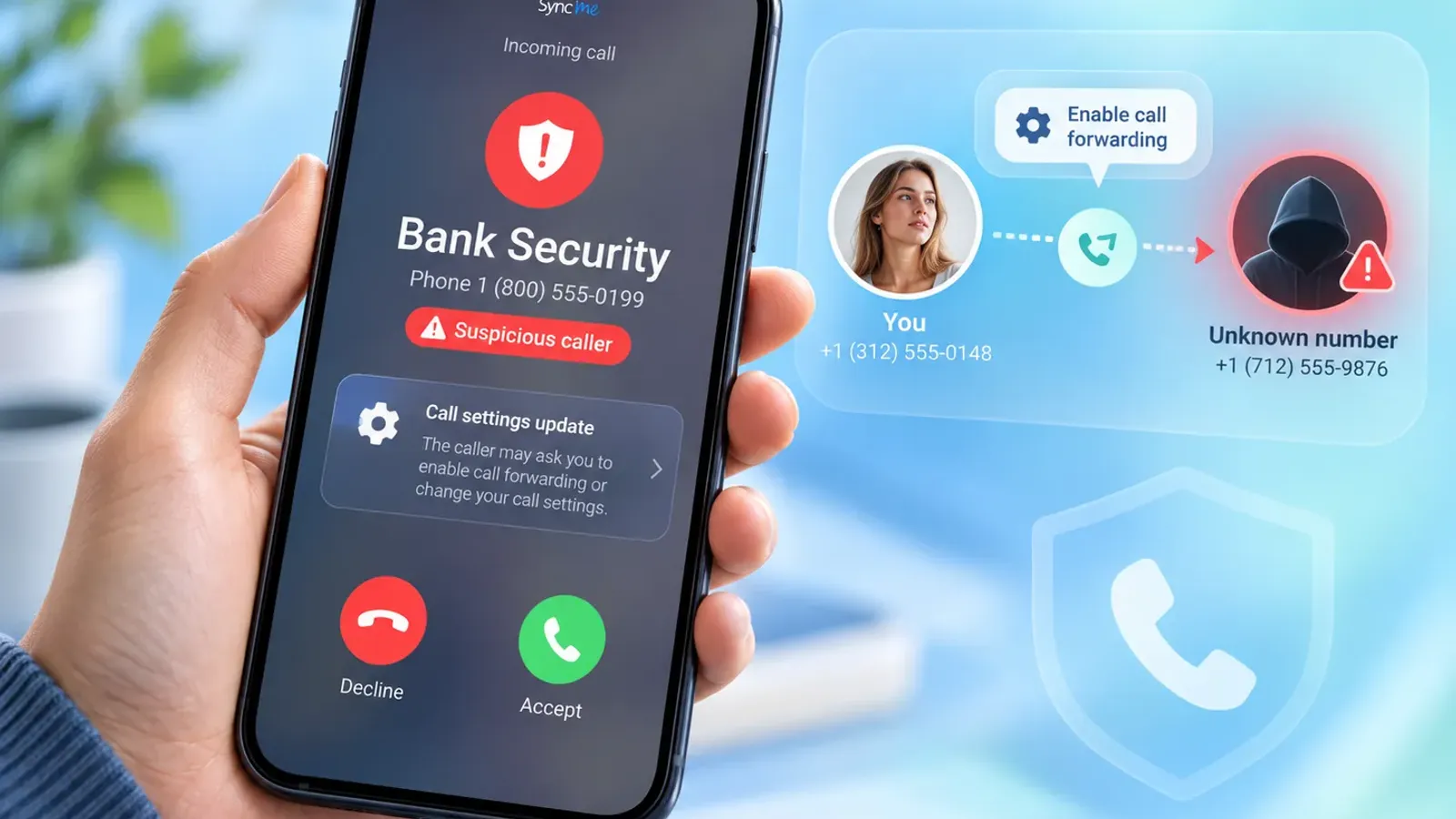
Many of those scams start with a friendly voice on the phone. A "bank agent" or "carrier rep" asks you to dial a short code or change a setting. That small step can be the start of a call forwarding scam, where your incoming calls are quietly sent to a number the scammer controls.
Call forwarding itself is a handy, legitimate phone feature. The trouble begins when someone else sets it up for you. Redirected calls can mean intercepted verification calls, missed security alerts, and a path to unauthorized access to your accounts. This guide explains how the scam works, how to spot it, and what to do about it.
What Is a Call Forwarding Scam?
A call forwarding scam is an attempt to redirect your incoming calls to a phone number controlled by a scammer, usually without your informed consent. If the calls meant for you reach the scammer, the scammer hears things that were never meant for them.
Legitimate call forwarding is something you choose. You might send calls to your office line while you travel or to a second phone when your battery is low. Fraudulent call forwarding is redirection you did not knowingly set up, often after a persuasive stranger walked you through the steps.
Scammers use a few routes to get there:
- Manipulating phone settings while you are on a call with them
- Tricking you into dialing a forwarding code
- Exploiting access to your carrier account
You may also see this attack called a call forwarding scam. Both names describe the same idea: your calls end up somewhere you did not choose.
How Does a Call Forwarding Scam Work?
A call forwarding scam works by getting your calls routed to the scammer, either through your own actions or through a weak point in your carrier account. There are three common methods, and each one relies on trust or pressure.

Scammers Trick You Into Enabling Call Forwarding
The most common method is social engineering. A caller pretends to be from your bank, your mobile carrier, or a technical support team and says there is a problem that needs fixing right now.
Typical claims include:
- "We need to verify your account."
- "We are troubleshooting a network issue on your line."
- "There is a security threat, and we must run an urgent check."
The caller then asks you to dial a code or open your settings. If you follow along, your incoming calls may be redirected to another number. Most people never notice, because the phone still looks normal.
Scammers Exploit Call Forwarding to Intercept Verification Calls
Once calls are redirected, a scammer can answer voice-based verification calls and account recovery calls meant for you. Scammers often pair forwarding with stolen passwords or details gathered through phishing.
Our guide on spoofing vs phishing shows how these tactics work together.
Forwarding alone does not unlock every account. The scammer usually needs extra information or a weak security setting to finish the job. That is good news, because it means each layer of protection you add makes the attack harder.

Scammers Use Carrier or Account Impersonation
Some criminals skip you completely and contact your carrier. They pose as the account holder and ask support to change call-routing settings, or they use stolen account details to log in themselves.
This is different from a SIM swap. A SIM swap moves your phone number to a different SIM or eSIM, which gives the attacker your calls and texts.
You can read more in our article on what a SIM swap scam is and how to prevent it.

What Are the Warning Signs of Unauthorized Call Forwarding?
The clearest sign is that calls you expect no longer reach your phone. The signs are subtle and easy to blame on a bad signal.
Watch for these red flags:
- Expected calls stop arriving. Friends, family, or your bank say they called, but your phone never rang.
- Other people report odd results. Callers hear that your number is unavailable, or they reach a stranger.
- You find forwarding settings you never enabled. A number you do not recognize appears in your call settings.
- Your carrier sends unexpected notices. You get alerts about account or service changes you did not request.
- An unsolicited caller asks for action. Someone tells you to dial a code, change a setting, or read out a verification code.
Service problems have many ordinary causes, such as network outages, a full inbox, or Do Not Disturb. A missing call is not proof of fraud, so confirm any suspicious change with your carrier before you assume the worst.

What Can Scammers Do With Forwarded Calls?
With forwarded calls, scammers can intercept verification calls, impersonate you, and cut you off from people trying to reach you. How much damage they do depends on which calls are forwarded and what else they already know about you.
Here is what that can look like:
- Intercept voice codes and recovery calls meant for your accounts
- Pretend to be you when they speak to a business or service provider
- Combine forwarded calls with stolen credentials to attempt an account takeover
- Block legitimate calls, so you miss fraud alerts from your bank
Fact: A call forwarding scam redirects your incoming calls to a number the scammer controls, which can expose voice verification codes and account recovery calls.
A scammer with only your forwarded calls has limited power. Add your password, and the risk grows, so the protection steps below work best together.

How Can You Protect Yourself From a Call Forwarding Scam?
You can protect yourself by refusing unexpected setup instructions, checking your forwarding settings, locking down your carrier and online accounts, and treating unknown callers with care. If you are searching for call forwarding scam how to stay safe, these four habits cover most of the risk.
Never Follow Unexpected Instructions to Enter Phone Codes
No real bank or carrier needs you to dial a code during an unsolicited call. Follow these steps whenever a caller pushes you to act:
- Stop and do not dial anything. Urgency is the scammer's main tool.
- Keep your passwords, PINs, and verification codes private. Never share them with someone who contacted you first.
- Hang up and contact your carrier directly. Use its official website, app, or a verified support number, not the number the caller gave you.
Our article on callback traps explains why calling back the number a stranger gave you can backfire.
Check Your Call Forwarding Settings
Checking your settings takes about two minutes and is the fastest way to catch a redirect. Review the options on your phone and in your carrier account:
- Open your phone's call settings. On iPhone, look under Settings, then Phone, then Call Forwarding. On Android, open the Phone app, then its settings, and find call forwarding under supplementary services.
- Look for numbers you do not recognize. Turn off any forwarding rule you did not create.
- Check your carrier account too. Some forwarding rules live on the carrier side and will not show in your phone menu.
- Contact your carrier if settings look locked or unfamiliar. That can mean they are controlled from outside your phone.
Many carriers also support status-check codes, but they differ by carrier and country. Confirm the correct code on your carrier's official support page before you dial anything.
Strengthen Your Carrier and Online Accounts
Strong account security makes a stolen call far less useful. The FCC has adopted rules that require wireless providers to notify customers about SIM change and port-out requests, as The Record reported, but your own settings still matter.
- Add a carrier account PIN or any extra protection your provider offers
- Switch to an authenticator app or security key instead of SMS or voice verification where supported
- Keep your recovery details current so you can regain access quickly
- Read security notifications and act on the ones you did not expect
Be Careful With Unknown Calls
Treat every unexpected request to change phone settings as suspicious, and check unknown numbers before you call back or follow instructions.
This is where Sync.me caller ID helps. It can identify unknown callers, and its spam call blocker flags numbers reported as spam or scams. You can also run a reverse phone lookup on a number you do not recognize.
One honest limit applies. Caller identification cannot tell you whether your forwarding settings have been changed, so keep reviewing those settings yourself.
What Limits Should You Keep in Mind When Checking for Call Forwarding?
The main limit is that some forwarding rules sit on your carrier account, so a clean phone menu does not guarantee your calls are safe. If you only check your handset, you could miss a redirect that was set up through your carrier.
A few other realities are worth knowing:
- Settings may be locked or hidden. If you cannot change a rule, the carrier needs to look at your account.
- Carrier tools differ. Menus, codes, and support steps vary by provider and country.
- Changing your phone number may not fix the problem. If the issue sits in your carrier account or your credentials, a new number carries the same weak points.
If your accounts handle money, such as banking or payment apps, tell those providers as soon as you suspect a problem. Reporting a scam number also helps others, and you can do that on the Sync.me report page.
Why Should You Act Quickly on Unexpected Call Routing Changes?
Unexpected call routing changes should be investigated promptly, because unauthorized redirection quietly undermines both your phone and your account security. Call forwarding is useful when you set it up on purpose.
The key protections are easy to remember: verify every request, check your forwarding settings, secure your carrier access, and use stronger authentication than voice or SMS codes. If you remember one answer to call forwarding scam how to stay safe, make it this: never dial a code or share a verification code because an unexpected caller asked. Add a habit of checking unknown numbers, and a call forwarding scam has very little room to work.
If something feels off, do not ignore it. Contact your carrier through an official channel and review your settings today.
Take Control of Your Incoming Calls with Sync.me
Download Sync.me and identify unknown callers before you answer, so scam calls have a harder time reaching you.
Frequently Asked Questions
Can scammers forward my calls without having physical access to my phone?
Yes. A scammer can talk you into dialing a code or changing a setting, or can use your carrier account to change routing. Neither method needs the phone in their hands.
Does call forwarding still work when my phone is switched off?
It can. Unconditional forwarding is handled by the carrier network, so calls may be redirected whether your phone is on or off. Results depend on the forwarding type and your carrier.
Can I find out which number my calls are being forwarded to?
Usually yes. Check the call forwarding menu on your phone and the settings in your carrier account. If you cannot see the destination number, ask your carrier to confirm it through its official support channel.
Will changing my phone number resolve an unauthorized call forwarding issue?
Not always. If the weak point is your carrier account or a stolen password, a new number may not stop the problem. Secure the account first, then decide whether a new number is worth it.
Can a scammer use forwarded calls to bypass two-factor authentication?
They can try if your service sends the code through a voice call. A scammer who also has your password has a better chance. An authenticator app or security key removes that risk.
Похожие статьи
10 Common Phone Scams That Still Fool Thousands Every Week
Learn the 10 most common phone scams targeting people right now. Understand how each one works and how to protect yourself before you pick up.
8 Common Scam Texts Everyone Should Learn to Recognize
Learn about common scam texts, including fake delivery alerts, bank warnings, job offers, and more. Discover warning signs and safe ways to respond.
How to Protect Your Phone Number: 9 Simple Safety Rules
Your phone number is more exposed than you think. Follow these 9 practical rules for phone number protection and reduce your risk of spam calls and scams.