The Rise of AI Voice Cloning Scam: How It Works and How to Verify Who's Really Calling
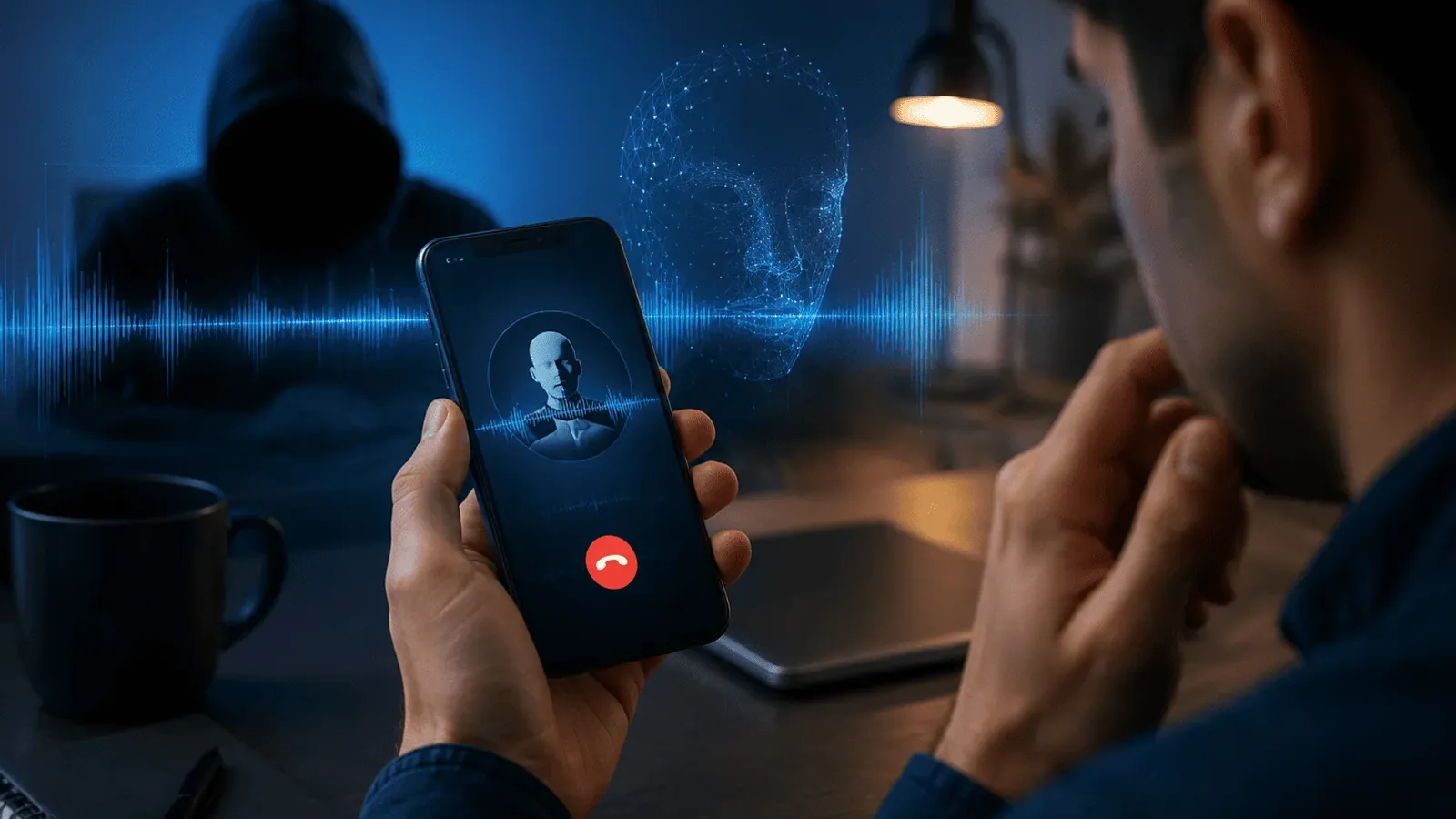
Your phone rings. It's your son's number. His voice is shaking: "Mom, I was in an accident. I need you to send money right now. Please don't tell anyone." Your heart drops. You're about to act.
But here's the thing: it might not be your son at all.
According to the FTC Consumer Protection Data Spotlight, 2025, imposter scams were the most reported fraud complaint of the year, with reported losses topping $3.5 billion. And a growing share of those scams involved AI voice cloning technology that can make a stranger sound exactly like someone you love.
An AI voice cloning scam is a phone scam where fraudsters use artificial intelligence to copy a real person's voice and use it to deceive the people who trust that person. The scammer might pose as a family member, a colleague, a bank representative, a lawyer, or even a government official. What all these calls have in common is urgency, pressure, and the convincing sound of a voice you recognize.
Knowing how these scams work is one of the most practical things you can do right now to protect yourself.
How Do AI Voice Cloning Scam Calls Actually Work?
Voice cloning scam calls follow a surprisingly predictable pattern. Understanding each step makes it much easier to catch what's happening before it's too late.
1. Scammers Collect Voice Samples
Scammers start by gathering audio of the person they want to impersonate. Social media videos, TikToks, YouTube interviews, podcast appearances, voicemail greetings, and even short clips posted by family members are all fair game.
The person being impersonated usually has no idea their voice was used. According to McAfee's 2025 report, as little as three seconds of audio is enough to create a clone with an 85% voice match to the original speaker. If you've ever posted a birthday video or tagged someone in a reel, that audio exists publicly.
2. AI Tools Build a Voice Imitation
Once a scammer has a voice sample, an AI tool processes it and creates a synthetic version of that voice that can say anything the scammer types or records. The output mimics tone, pacing, accent, and speech patterns well enough to fool someone on a phone call.
The barrier to entry here has essentially collapsed. These tools are cheap, widely available, and require no technical background to use. That's what makes the current wave of voice cloning scams so different from earlier phone fraud.
3. The Scammer Builds an Urgent Story
The AI-generated voice delivers a scripted scenario designed to trigger an immediate emotional response. Common scripts include:
- "I was in a car accident."
- "I'm in jail and need bail money."
- "I lost my wallet, and my phone is about to die."
- "I need money right now. Do not tell anyone else."
Urgency is the core tool here. The faster a victim feels they need to act, the less likely they are to pause and verify. Scammers rely on this window of panic to push for a decision before anyone thinks too clearly.
4. The Caller Asks for Money or Sensitive Information
The final step is the request itself. AI voice cloning scam phone calls typically ask for:
- Bank transfers or wire payments
- Gift cards (and the codes read aloud over the phone)
- Cryptocurrency payments
- Peer-to-peer payment apps like Venmo, Zelle, or Cash App
- Passwords, PINs, or one-time verification codes
- Personal identification details
These payment methods are chosen deliberately. Most of them are fast, difficult to trace, and nearly impossible to reverse. By the time a victim realizes something is wrong, the money is gone.

What Are the Most Common Types of Voice Cloning Scams?
Here is the full section rewritten to replace the table with a clean bulleted list, keeping all your original introductory and concluding paragraphs intact:
Voice cloning scam calls are not one-size-fits-all. Scammers adapt their approach depending on the target and what story is most likely to land.
- Family Emergency Scam: Scammers impersonate a child, grandchild, sibling, or spouse to request money for bail, medical bills, or a sudden travel emergency.
- Business Impersonation Scam: Scammers impersonate a CEO, manager, or finance contact to demand an urgent wire transfer or account access.
- Bank or Account Security Scam: Scammers impersonate a bank representative or fraud department worker to steal verification codes, passwords, and account numbers.
- Government or Legal Threat Scam: Scammers impersonate an IRS agent, lawyer, or police officer to demand payment to avoid arrest or legal action.
The family emergency scam is among the most emotionally damaging. A grandparent hears their grandchild's voice in distress and responds exactly as they should: with love and urgency. That instinct, entirely normal and good, is exactly what the scammer is exploiting.
Business impersonation scams cause some of the largest single losses. In one widely covered 2024 case, a finance employee at a global engineering firm was tricked into transferring $25.6 million after joining what appeared to be a video conference with deepfaked versions of company executives.
What Are the Warning Signs of a Voice Cloning Scam Call?
Recognizing a scam in real time is hard, especially when the voice sounds familiar. These are the clearest signals that something is off:
- The call creates sudden fear or panic. Emotional escalation is a tool, not a coincidence.
- The caller insists on secrecy. "Don't tell anyone" is a major red flag. Real emergencies involve other people knowing.
- The caller avoids personal verification questions. Ask something only the real person would know. A cloned voice cannot answer spontaneously.
- The caller pressures you to act immediately. Urgency is manufactured to stop you from thinking.
- The number looks suspicious, unknown, or hidden. Even if a number looks familiar, it may be spoofed.
- The payment method is unusual. Gift cards, crypto, and wire transfers are not how real emergencies get resolved.
- The story shifts when you ask questions. Scammers follow scripts. Unexpected questions create inconsistencies.
- The caller tells you not to contact anyone else. Isolation is a core tactic in every version of this scam.
Any single one of these signs is enough reason to hang up and verify independently. You do not need to be certain. Suspicion alone is worth acting on.
How to Verify Who Is Really Calling
The good news is that verifying a call before you respond takes less than two minutes. Here is exactly what to do.
1. Hang Up and Call Back Using a Saved Number
Do not call back the number that just contacted you, even if it looks correct. Use the person's saved contact in your phone, look them up on an official website, or use a number you have written down elsewhere.
Calling back through a known, verified number is the single most reliable way to confirm whether the original call was real. If you can't reach the person directly, that's important information too.
2. Ask a Private Verification Question
Before accepting that you're speaking to who they claim to be, ask a question only the real person could answer. This should be something personal and specific: an inside joke, a shared memory, a detail that would never appear on social media.
Avoid questions like "What's your birthday?" or "What street did you grow up on?" Those answers may already be findable online. The question should require a genuine, spontaneous response.
3. Create a Family or Team Safe Word
Set up a code word with your family or close team members in advance. If a call ever feels off, ask for the safe word. If the caller doesn't know it or deflects, end the call immediately.
This works especially well for families with elderly members who may be more frequently targeted. Agree on the word during a calm, non-urgent conversation so everyone knows when and how to use it.
4. Check Caller ID and Spam Signals Before Answering
One of the fastest ways to catch a suspicious call early is to look at who is calling before you pick up. If the number is unknown, flagged, or doesn't match the saved contact it claims to be, treat it with caution.
Tools like Sync.me’ Caller ID is built for exactly this. Sync.me's reverse phone lookup and spam detection features help you identify unknown callers and flag numbers that have already been reported as spam or scam sources. Seeing that a number is unknown, unverified, or previously flagged gives you the context to proceed carefully rather than reacting on emotion.
5. Contact Another Trusted Person to Confirm
If someone claims a family member is in trouble, call another family member before doing anything else. Two people are harder to deceive simultaneously than one.
For workplace situations, use a completely separate channel to verify. Send an email to the person's known work address, message them on Slack, or call their known desk number. Never authorize sensitive actions based on a single phone call alone.

How Sync.me Can Help You Handle Suspicious Calls
The first line of defense against an AI voice cloning scam phone call is knowing who is actually calling before the conversation begins. That's exactly what Sync.me is designed to do.
- Identifies unknown callers instantly. Sync.me's reverse phone lookup shows you the name, location, and profile information connected to an incoming number, even if it's not saved in your contacts.
- Flags spam and scam calls automatically. Numbers reported by other users as spam, fraud, or scam are surfaced so you can make an informed decision before answering.
- Keeps your contact list accurate. Up-to-date contact details make it easier to spot when a number doesn't match the person it claims to be.
- Supports faster verification. When you can see clearly that a number is unknown or previously flagged, you're less likely to be caught off guard by a convincing voice on the other end.
Understanding how spam call detection works can give you a clearer picture of what tools like Sync.me are actually catching and why caller ID remains a critical first step in phone safety.
Voice Cloning Scams Are a Trust Problem, Not Just a Tech Problem
The most dangerous thing about an AI voice cloning scam is not the technology. It's that it turns your own trust against you.
Scammers succeed because they exploit the emotional shortcuts we rely on every day: hearing a familiar voice, feeling urgency, wanting to protect the people we love. No amount of technical sophistication changes the core manipulation, and that means the most effective defense is behavioral, not just digital.
The safest response to any suspicious call is simple: pause, hang up, and verify through a channel you control. Do not send money under any form of phone pressure. Do not share verification codes, passwords, or personal details with anyone who initiated contact with you.
Knowing who is really calling is no longer just a convenience. It's a core part of staying safe.
Download Sync.me for free and know who's calling before you ever pick up.
Frequently Asked Questions
How can caller ID help detect a possible AI voice cloning scam?
Caller ID shows you the number behind an incoming call, and tools like Sync.me can tell you whether that number matches a known contact, is unknown, or has been flagged as spam. If a number doesn't line up with who the caller claims to be, that mismatch is an early warning sign worth taking seriously.
Should I answer a call if the number looks unknown but the voice sounds familiar?
A familiar-sounding voice is not reliable verification on its own. Voice cloning scam calls are specifically designed to sound like people you know. If the number is unrecognized, use extra caution, ask a personal verification question, or hang up and call the person back through a saved contact number.
Can scammers fake both a phone number and a person's voice?
Yes. Number spoofing lets scammers make calls appear to come from a number you recognize, and AI voice cloning lets them sound like the person whose number they're using. Both techniques can be used together, which is why neither a familiar number nor a familiar voice is sufficient verification on its own.
Can spam detection apps help protect against voice cloning scam calls?
Spam detection apps add an important layer of protection by flagging numbers that have been previously reported as scam or fraud sources. While they can't detect a cloned voice mid-call, they can alert you before you answer, giving you the context to approach the call with healthy skepticism from the start.
How can caller ID help me verify who is really calling?
Caller ID, especially when powered by a reverse lookup tool, lets you cross-check the incoming number against known contacts and community-reported spam data. If the number is unknown, hidden, or flagged, that information helps you decide whether to answer at all or to verify through a separate channel before responding to any request.
संबंधित पोस्ट
10 Common Phone Scams That Still Fool Thousands Every Week
Learn the 10 most common phone scams targeting people right now. Understand how each one works and how to protect yourself before you pick up.
What Happens When You Answer a Scam Call (The Real Risks Explained)
Learn what happens when you answer a scam likely call, what scammers collect from that interaction, and exactly what to do if you shared any information.